GitHub hosts HunyuanVideo, Tencent's open-source framework for large-scale video generation models, enabling AI-driven video creation.

DeepMind RETRO
0Popularity
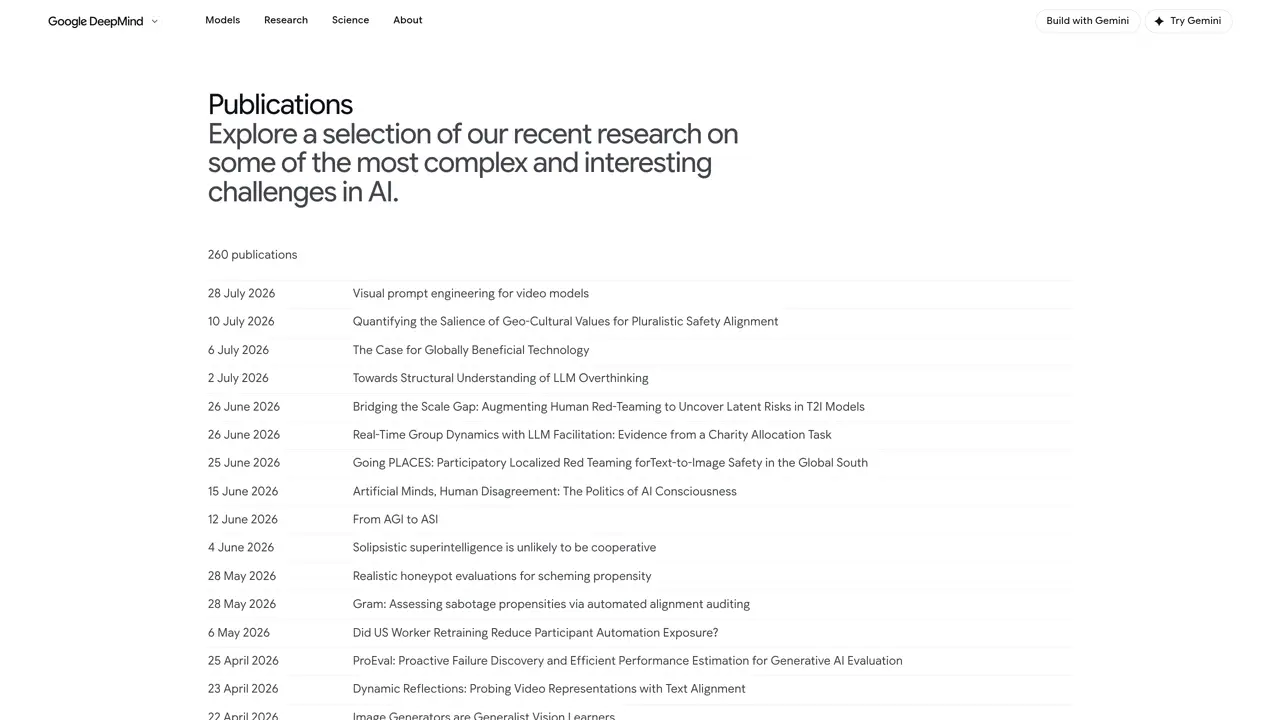
About DeepMind RETRO
DeepMind RETRO is an AI-powered language modeling service that helps customers improve their natural language processing capabilities. It uses a powerful retrieval algorithm that can search through trillions of tokens to provide the best possible results. This service is ideal for businesses or organizations that rely heavily on natural language processing tools for their operations. With DeepMind RETRO, customers can benefit from a faster and more accurate search process, reducing the time and effort spent on manual language modeling tasks. Additionally, its AI-powered algorithms can quickly and accurately identify the best tokens for the job, ensuring that customers get the best results. Ultimately, DeepMind RETRO provides customers with a reliable and efficient language modeling service that can help them save time and money while improving the quality of their natural language processing results.
Key features
- Quickly identifies optimal tokens for desired results
- Improves natural language processing capabilities
- Searches trillions of tokens to provide best results
Use cases
- Businesses or organizations that rely heavily on natural language processing tools
- Customers who want to improve their natural language processing capabilities
- Users who need a faster and more accurate search process for manual language modeling tasks
Pros
- Enhances language model performance by retrieving relevant information from a vast corpus of trillions of tokens
- Reduces reliance on manual language modeling by automating token selection and retrieval
- Improves accuracy and relevance of natural language processing tasks through dynamic retrieval
- Designed for scalability, making it suitable for large-scale NLP applications
- Developed by DeepMind, leveraging advanced AI research and methodologies
Cons
- Requires significant computational resources for large-scale retrieval operations
- May introduce latency due to the need to search through extensive token databases
- Complexity in implementation and integration for organizations without specialized AI teams
- Dependent on the quality and relevance of the underlying retrieval corpus
Frequently asked questions about DeepMind RETRO
What is DeepMind RETRO and what does it do?
DeepMind RETRO is a retrieval-augmented language model designed to enhance natural language processing by retrieving relevant information from a vast dataset of trillions of tokens. It improves the accuracy and efficiency of language tasks by combining retrieval mechanisms with language modeling.
Who is DeepMind RETRO suitable for?
DeepMind RETRO is suitable for researchers, developers, and organizations working on advanced natural language processing tasks that require high accuracy and scalability, such as question answering, text generation, and information retrieval.
How does DeepMind RETRO work?
DeepMind RETRO works by retrieving relevant tokens from a large-scale database and using them to augment the language modeling process. This retrieval step helps improve the model's performance by providing contextually relevant information during generation.
What are the key features of DeepMind RETRO?
Key features include retrieval-augmented language modeling, scalability to trillions of tokens, improved accuracy for language tasks, and integration with existing NLP workflows. It is designed to enhance performance in tasks requiring deep contextual understanding.
Does DeepMind RETRO integrate with other tools or platforms?
DeepMind RETRO is primarily a research-focused tool and may require custom integration depending on the use case. It is designed to be compatible with standard NLP pipelines but does not have a publicly listed set of pre-built integrations.
How can I get started with DeepMind RETRO?
To get started with DeepMind RETRO, users can explore the research publication and technical details available on DeepMind's website. Implementation typically requires familiarity with machine learning frameworks and retrieval-augmented modeling techniques.