GitHub hosts HunyuanVideo, Tencent's open-source framework for large-scale video generation models, enabling AI-driven video creation.

Kaskada
4.9KMonthly visits
12Popularity
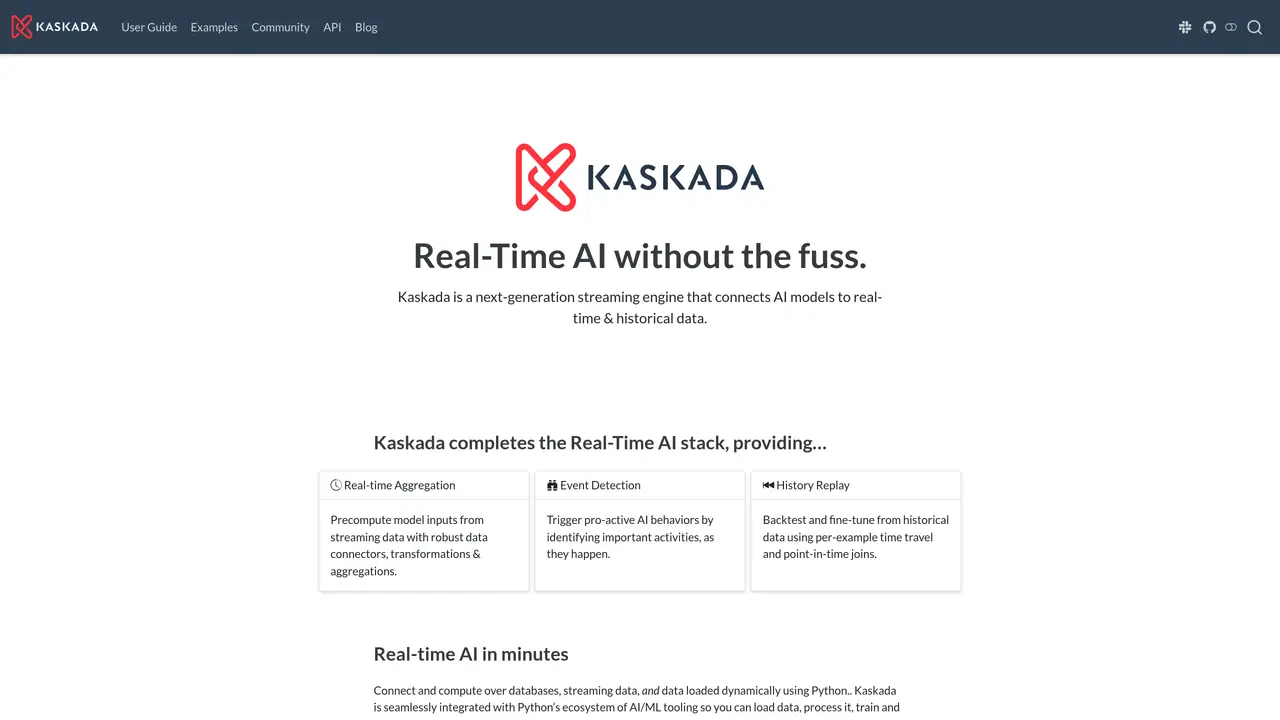
About Kaskada
Kaskada is an artificial intelligence platform that helps to collect, organize, and analyze data from any source. It enables businesses to quickly and easily create powerful data-driven applications that improve their operations, reduce costs, and increase efficiency. With Kaskada, businesses can access data from any source, including third-party sources, and harness the power of machine learning to gain insights and drive better decisions.Kaskada simplifies the process of collecting, organizing, and analyzing data, allowing businesses to make informed decisions quickly. Through its automated platform, businesses can quickly process data and create predictive models, enabling them to identify trends and make better decisions. Additionally, Kaskada’s intuitive dashboard allows users to quickly and easily manage their data, generate reports, and access insights. Kaskada is designed to provide businesses with the tools they need to make informed decisions quickly and efficiently.
Key features
- Quickly access data from any source
- Automate data processing and predictive modelling
- Utilize intuitive dashboard to manage data
- Create powerful data-driven applications
- Reduce costs and increase efficiency
- Harness the power of machine learning
Use cases
- Businesses can quickly process data and create predictive models to identify trends and make better decisions.
- Kaskada enables businesses to improve their operations, reduce costs, and increase efficiency by creating powerful data-driven applications.
- With Kaskada's automated platform, businesses can simplify the process of collecting, organizing, and analyzing data.
Pros
- Enables real-time AI applications by connecting models to streaming and historical data
- Supports precomputation of model inputs with robust data connectors and transformations
- Allows history replay for backtesting and fine-tuning using per-example time travel
- Integrates seamlessly with Python’s AI/ML ecosystem for end-to-end workflows
- Built for scalability with a cloud-native design and partitioned execution support
Cons
- Requires familiarity with Python and data processing concepts
- Limited documentation visibility for advanced features without community exploration
Frequently asked questions about Kaskada
What is Kaskada and what does it do?
Kaskada is a next-generation streaming engine designed to connect AI models to real-time and historical data. It enables real-time aggregation, event detection, and history replay for building and testing predictive models efficiently.
Who should use Kaskada?
Kaskada is built for data scientists, engineers, and businesses that need to process streaming data and build real-time AI applications without managing complex infrastructure.
How does Kaskada integrate with existing tools?
Kaskada seamlessly integrates with Python’s AI/ML ecosystem, allowing users to load data, process it, train models, and serve predictions all in the same environment without additional infrastructure setup.
Can Kaskada handle both real-time and historical data?
Yes, Kaskada supports real-time data processing as well as history replay, enabling users to backtest and fine-tune models using historical data with per-example time travel and point-in-time joins.
What programming languages or frameworks does Kaskada support?
Kaskada is primarily designed for use with Python, leveraging libraries like PyArrow for data handling and compatibility with machine learning frameworks.
How do I get started with Kaskada?
Getting started with Kaskada is as simple as installing it via pip and following the Quick Start guide available on their website to begin building real-time AI applications.
Kaskada Website Engagement
Last Update: 9 days ago
Total Monthly Visits
0
Bounce Rate
0%
Visit Duration (avg)
0.00s
Pages Per Visit
0
Country Rank
0
United States
Global Rank
0
Monthly Traffic
Traffic Sources
Traffic Share By Country
- United States62.2%
- India24.1%
- Ghana13.7%