GitHub hosts HunyuanVideo, Tencent's open-source framework for large-scale video generation models, enabling AI-driven video creation.

Microsoft Luis
470Monthly visits
0Popularity
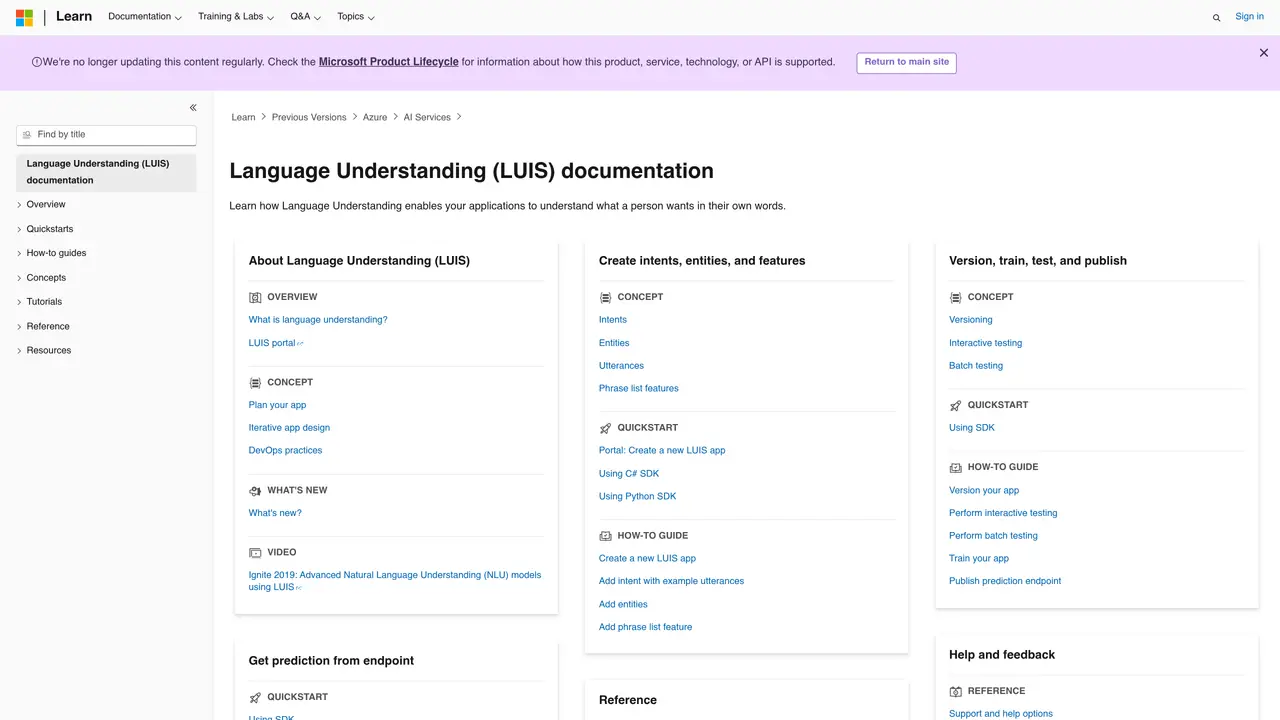
About Microsoft Luis
Microsoft Luis is an AI-powered natural language processing (NLP) service that enables developers to create sophisticated and accurate spoken and text-based applications. With Microsoft Luis, developers can quickly create powerful language-understanding tools that can be used to build virtual assistants, chatbots, and more. It also provides a wide range of pre-built language-understanding models which can be used to create applications that understand natural language and respond accordingly. The service is designed to be easy to use and integrate with existing applications, and its intuitive user interface allows developers to quickly create, train, and deploy models. Additionally, its powerful analytics tools allow developers to understand and optimize the performance of their applications. Microsoft Luis is the ideal choice for anyone looking to create natural language processing applications quickly and efficiently.
Key features
- Create virtual assistants quickly
- Easily train & deploy models
- Optimize performance with analytics
- Pre-built language-understanding models
- Intuitive user interface
- Powerful analytics tools
Use cases
- Creating virtual assistants for customer service or support
- Building chatbots for e-commerce or marketing applications
- Developing natural language processing applications for healthcare or finance industries
Pros
- Enables applications to interpret user intent from natural language inputs
- Supports iterative app design and DevOps practices for model development
- Provides prebuilt entities, domains, and phrase list features to accelerate model training
- Offers interactive testing, batch testing, and performance analytics tools
- Integrates with multiple programming languages via SDKs and REST APIs
Cons
- Requires iterative training and testing to achieve high accuracy
- Limited to supported languages and regions
- May involve complexity in managing large-scale or domain-specific models
Microsoft Luis videos
Frequently asked questions about Microsoft Luis
What is Microsoft LUIS used for?
Microsoft LUIS enables applications to understand user input in natural language by identifying intents and extracting entities from utterances. It is designed to power conversational interfaces like chatbots and virtual assistants.
Who should use Microsoft LUIS?
Developers and teams building conversational AI applications, such as chatbots or virtual assistants, that require natural language understanding capabilities. It is suitable for those integrating NLP into existing applications or creating new ones.
How does Microsoft LUIS work?
Users create an app in the LUIS portal, define intents and entities, and train the model with example utterances. The service then processes user input to predict intents and extract relevant entities for application responses.
Can Microsoft LUIS be integrated with other applications?
Yes, LUIS provides SDKs and REST APIs for integration with applications built in various programming languages, including C#, Python, Java, Node.js, and Go.
What are the key steps to get started with Microsoft LUIS?
Start by creating a new LUIS app in the portal, then define intents and entities, add example utterances, train the model, and publish a prediction endpoint. The portal offers quickstart guides and SDK examples to facilitate this process.
Does Microsoft LUIS support prebuilt models or domains?
Yes, LUIS offers prebuilt entities and prebuilt domains that can be used to accelerate development, along with customizable features like phrase lists for improved model performance.
Microsoft Luis Website Engagement
Last Update: 9 days ago
Total Monthly Visits
0
Bounce Rate
—
Visit Duration (avg)
—
Pages Per Visit
—
Country Rank
—
Unknown
Global Rank
—