GitHub hosts HunyuanVideo, Tencent's open-source framework for large-scale video generation models, enabling AI-driven video creation.

Sieve
122Monthly visits
0Popularity
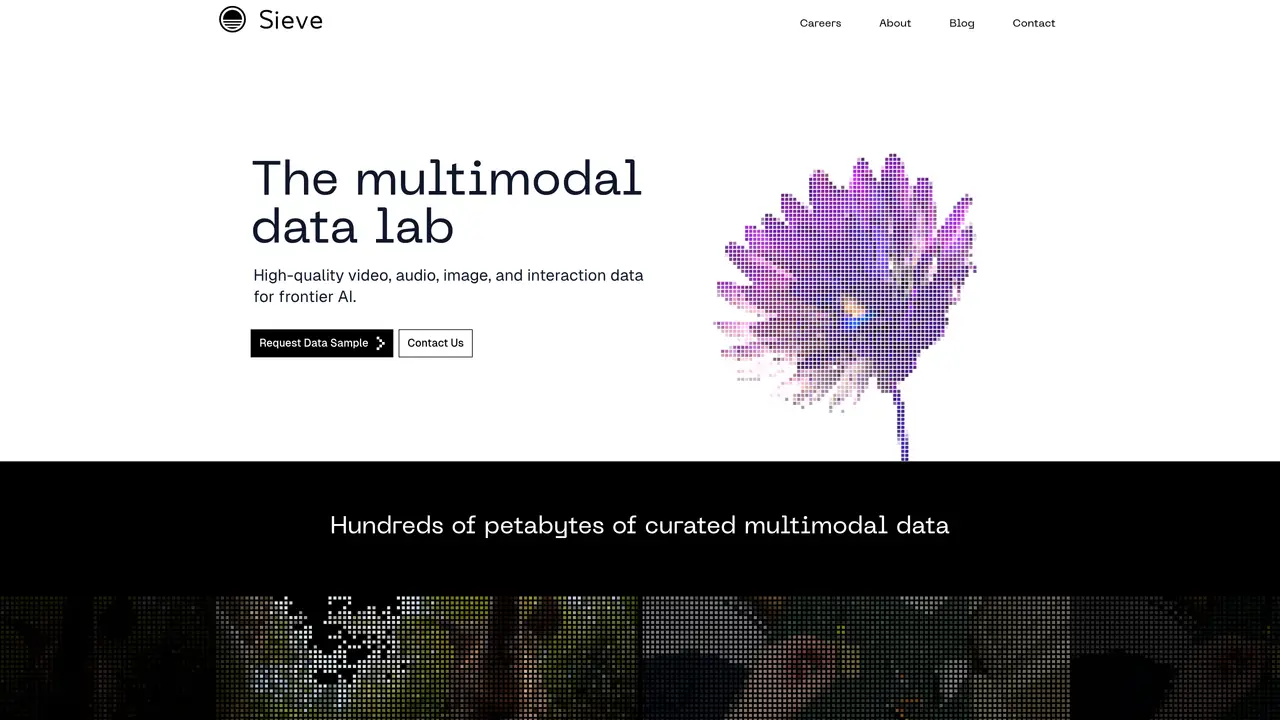
About Sieve
Sieve is a cloud-based platform that enables users to create and deploy sophisticated AI applications leveraging multiple models. It supports tasks such as audio understanding, video generation, smart video cropping, transcript analysis, lip synchronization, and content dubbing. The platform provides access to state-of-the-art models and production-ready applications, allowing developers to integrate advanced AI capabilities with just a few lines of code. Sieve simplifies AI development by offering visualization tools for debugging, seamless deployment of custom code, and scalable infrastructure that handles backend complexities like Docker and CUDA. This reduces the overhead of managing underlying infrastructure, accelerating development cycles and shortening time-to-market for AI-powered features. It is designed for developers and teams looking to harness AI without the burden of infrastructure management, making it ideal for prototyping and scaling AI applications efficiently.
Key features
- Multi-model cloud infrastructure for complex AI applications
- Pre-built production-ready AI apps for common use cases
- Visualization tools for debugging AI workflows
- Seamless deployment of custom code
- Scalable backend infrastructure handling Docker and CUDA
- Support for audio and video AI tasks
- Minimal code requirements for integration
- State-of-the-art model access
Use cases
- Building AI-powered video processing tools
- Automating transcript analysis and content dubbing
- Prototyping and deploying multi-model AI applications
Pros
- Provides high-quality multimodal datasets including video, audio, image, and interaction data for AI training.
- Offers dense annotations such as captions, transcripts, object labels, and action metadata for improved model accuracy.
- Supports compliance-first data handling with filtering, licensing, consent, and secure delivery controls.
- Enables custom data collection from real-world, digital, and simulated environments tailored to specific research needs.
- Delivers research-grade datasets and environments with end-to-end encryption and SOC 2 Type 2 compliance.
Cons
- Access to datasets typically requires a purchase agreement based on volume and task complexity.
- Custom data collection and annotation processes may involve extended scoping and delivery timelines.
Frequently asked questions about Sieve
What types of data does Sieve provide?
Sieve offers high-quality video, audio, image, and interaction data, including synchronized audio-visual data and editing pairs for controlled generation and editing.
Who is Sieve designed for?
Sieve is designed for leading AI teams, research labs, Fortune 100 companies, and fast-growing AI startups that require multimodal datasets for training and evaluating AI models.
How does Sieve handle data compliance and security?
Sieve supports compliance-first data handling with features like filtering, licensing, consent management, retention controls, and secure delivery via end-to-end encryption and SOC 2 Type 2 controls.
Can Sieve provide custom datasets tailored to specific needs?
Yes, Sieve works with teams to define data volume, distributions, metadata, licensing, and delivery formats, and can capture targeted real-world, digital, or simulated workflows based on research requirements.
What is the process for obtaining datasets from Sieve?
The process involves exploring capabilities, requesting samples, scoping the dataset, purchasing access, and receiving delivery within defined timelines or on SLA for custom data.
Does Sieve offer any ready-to-use datasets?
Yes, Sieve provides a browseable catalog of ready-to-use datasets across video, audio, image, computer use, and interactive environments.
Sieve Website Engagement
Last Update: 9 days ago
Total Monthly Visits
0
Bounce Rate
0%
Visit Duration (avg)
—
Pages Per Visit
0
Country Rank
—
Unknown
Global Rank
0