GitHub hosts HunyuanVideo, Tencent's open-source framework for large-scale video generation models, enabling AI-driven video creation.

Supermemory
$19Starting price
208KMonthly visits
39Popularity
About Supermemory
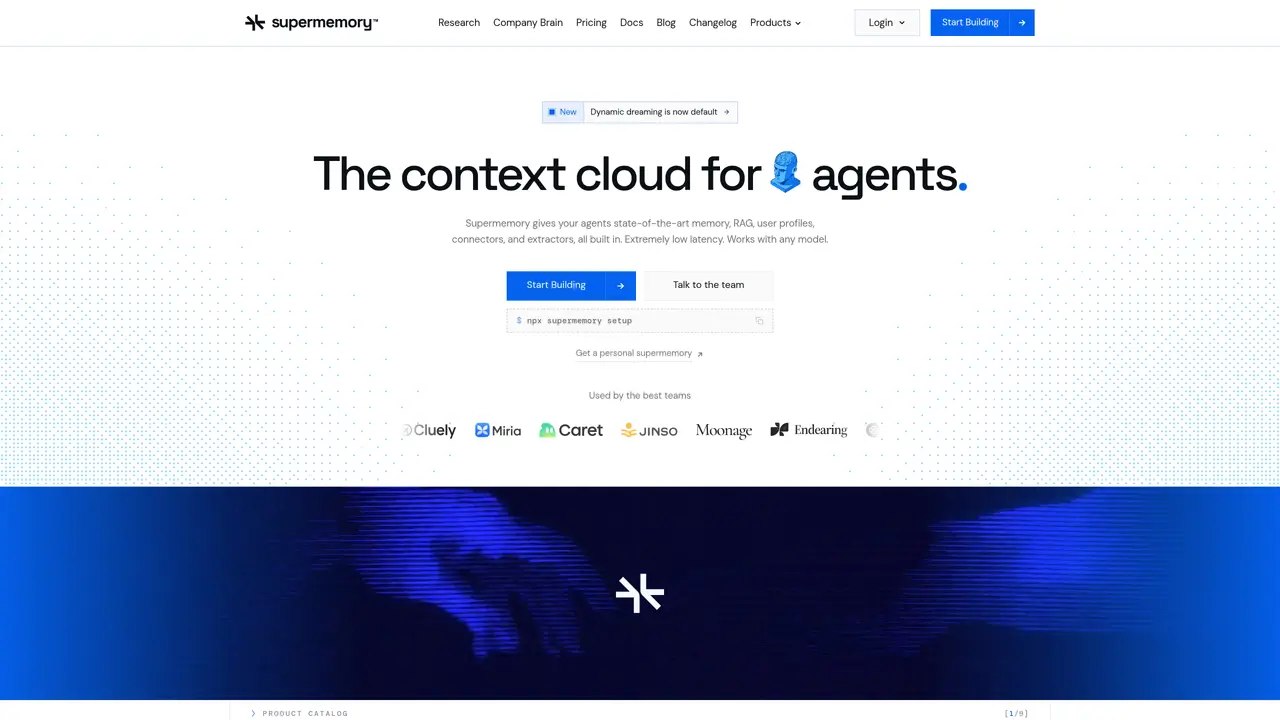
Supermemory is a memory layer and context engineering platform designed for developers, teams, and enterprises building AI agents and applications that require persistent, cross-session context. It offers a universal memory API that handles storage, chunking, retrieval, and context injection, enabling agents to maintain long-term memory across interactions. The platform features a five-layer context stack tailored for production use cases, including user profiles, a memory graph, hybrid retrieval (vector + keyword) with sub-300ms recall, multi-modal extractors for PDFs, web pages, images, and audio, and connectors to popular services like Notion, Slack, Google Drive, S3, and Gmail, as well as custom data sources. Supermemory supports model-agnostic integration through OpenAI-compatible clients and SDKs in TypeScript, Python, and REST, with compatibility for tools and frameworks such as LangChain, LangGraph, Vercel AI SDK, CrewAI, Zapier, and n8n. Enterprise deployment options include self-hosting, SOC 2 compliance, and data export controls, with no training on customer data. The platform processes over 100 billion tokens monthly and offers a personal app and plugins that share a unified memory across tools.
Key features
- Universal memory API for storage, chunking, retrieval, and context injection
- Five-layer context stack for production use cases
- Hybrid retrieval (vector + keyword) with sub-300ms recall
- Multi-modal extractors for PDFs, web pages, images, and audio
- Connectors for Notion, Slack, Google Drive, S3, Gmail, and custom sources
- OpenAI-compatible clients and SDKs (TypeScript, Python, REST)
- Integrations with LangChain, LangGraph, Vercel AI SDK, CrewAI, Zapier, and n8n
- Enterprise deployment with self-hosting, SOC 2 support, and data export controls
- Personal app and plugins sharing unified memory across tools
- Model-agnostic integration
Use cases
- Building AI agents requiring long-term, cross-session memory
- Enterprise applications needing persistent context and retrieval
- Multi-modal data processing with connectors to cloud services
Pros
- State-of-the-art memory and retrieval with sub-300ms latency for real-time agent interactions
- Unified memory graph combining user profiles, RAG, and structured context for coherent long-term memory
- Multi-modal data ingestion and extraction from PDFs, web pages, images, audio, and custom sources
- Model-agnostic integration via OpenAI-compatible clients and SDKs in TypeScript, Python, and REST
- Enterprise-grade features including SOC 2 compliance, self-hosting, and data export controls
Cons
- Complexity for small projects or teams without dedicated AI infrastructure
- Potential learning curve for configuring advanced features like the memory graph or custom connectors
Supermemory videos
Frequently asked questions about Supermemory
What is Supermemory and what does it do?
Supermemory is a context engineering platform that provides persistent, cross-session memory for AI agents and applications. It handles storage, retrieval, and context injection through a universal memory API, enabling agents to maintain long-term context across interactions.
Who is Supermemory designed for?
Supermemory is designed for developers, teams, and enterprises building AI agents and applications that require persistent context. It suits use cases ranging from AI assistants and research assistants to enterprise knowledge management.
How does Supermemory integrate with existing tools and frameworks?
Supermemory offers connectors to popular services like Notion, Slack, Google Drive, S3, and Gmail, as well as custom data sources. It supports model-agnostic integration through OpenAI-compatible clients and SDKs in TypeScript, Python, and REST, with compatibility for tools such as LangChain, LangGraph, Vercel AI SDK, CrewAI, Zapier, and n8n.
Can Supermemory be self-hosted?
Yes, Supermemory offers enterprise deployment options including self-hosting, SOC 2 compliance, and data export controls. It processes over 100 billion tokens monthly and does not train on customer data.
What types of data can Supermemory extract and process?
Supermemory supports multi-modal extractors for PDFs, web pages, images, and audio. It also provides a real filesystem mount for agents, enabling semantic search and automatic indexing of various file formats.
How do I get started with Supermemory?
Getting started with Supermemory involves installing the SDK, initializing the client, ingesting data, and configuring retrieval. The platform provides quickstart guides in TypeScript, Python, and cURL, allowing users to begin building in minutes.
Supermemory Website Engagement
Last Update: 9 days ago
Total Monthly Visits
0
Bounce Rate
0%
Visit Duration (avg)
0.00s
Pages Per Visit
0
Country Rank
0
Australia
Global Rank
0
Category Rank
#0
Graphics Multimedia & Web Design
Monthly Traffic
Traffic Sources
Traffic Share By Country
- United States32.4%
- India14.2%
- Indonesia8%
- Uzbekistan2.7%
- China2.6%