GitHub hosts HunyuanVideo, Tencent's open-source framework for large-scale video generation models, enabling AI-driven video creation.

WAKE
0Popularity
About WAKE
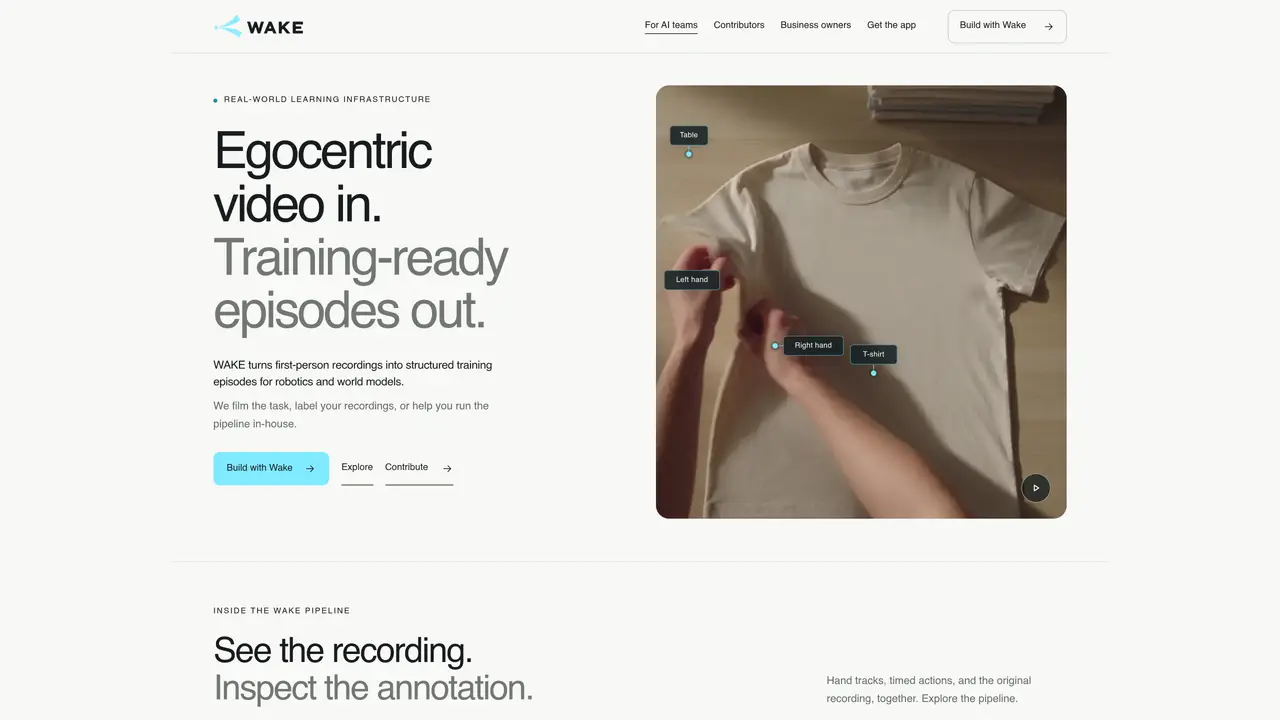
WAKE processes egocentric video recordings into structured training episodes suitable for robotics and world models. The platform supports three workflows: collection, labeling, and pipeline execution. In the collection workflow, WAKE films tasks based on specified requirements. The labeling workflow structures existing recordings into annotated episodes with timed actions and hand tracks. The pipeline workflow allows teams to run the process in-house while collaborating with WAKE for scoping and delivery. The system ingests video, task context, and metadata, then structures actions, reviews outcomes, and delivers training episodes aligned with predefined requirements. Users define capture context, episode structure, delivery context, and consent records to ensure the output meets their needs.
Key features
- Egocentric video ingestion
- Timed action and hand track annotation
- Failure and recovery capture
- Structured episode delivery
- Customizable episode structure
- Metadata and context capture
- Consent and rights management
- In-house pipeline execution option
Use cases
- Training robotics models with real-world task recordings
- Annotating and structuring egocentric video for world model learning
- Capturing and analyzing task failures and recovery sequences
Pros
- Supports three workflows: collection, labeling, and in-house pipeline execution
- Structures recordings into timed actions, hand tracks, and outcomes
- Handles both staged and natural task failures for recovery analysis
- Allows customization of episode structure and delivery requirements
- Facilitates collaboration between teams and contributors for task recording
Cons
- No clear indication of free tier or pricing tiers
- Limited to egocentric video input for training episodes
- Requires collaboration with WAKE for collection and labeling workflows
- No explicit mention of multi-language support
Frequently asked questions about WAKE
What does WAKE do?
WAKE converts egocentric video recordings into structured training episodes for robotics and world models. It supports three workflows: filming tasks, labeling existing recordings, or running the pipeline in-house.
Who is WAKE designed for?
WAKE is designed for AI teams, contributors, and business owners who need real-world training data for robotics or world models. It also supports contributors who record everyday tasks for compensation.
How does the WAKE pipeline work?
The pipeline ingests video, task context, and metadata, structures actions and outcomes, reviews results, and delivers training episodes aligned with predefined requirements. Users define capture context, episode structure, and delivery context.
Can WAKE handle task failures or interruptions in recordings?
Yes, WAKE captures failures staged for briefs or natural failures, including recovery steps. Interrupted or cut-short recordings can be structured into episodes that show recovery processes.
What inputs does WAKE require?
WAKE requires video recordings, task context, and capture metadata as inputs. Users also define delivery requirements, such as target schema and consent records.
How can I get started with WAKE?
Users can start by discussing their needs with WAKE for collection, labeling, or pipeline workflows. Contributors can record everyday tasks and get paid, while businesses can explore how recordings support their operations.