
AI-powered medical search engine that delivers synthesized, cited answers from peer-reviewed research for clinicians.

Docus
$3Starting price
144KMonthly visits
36Popularity
About Docus
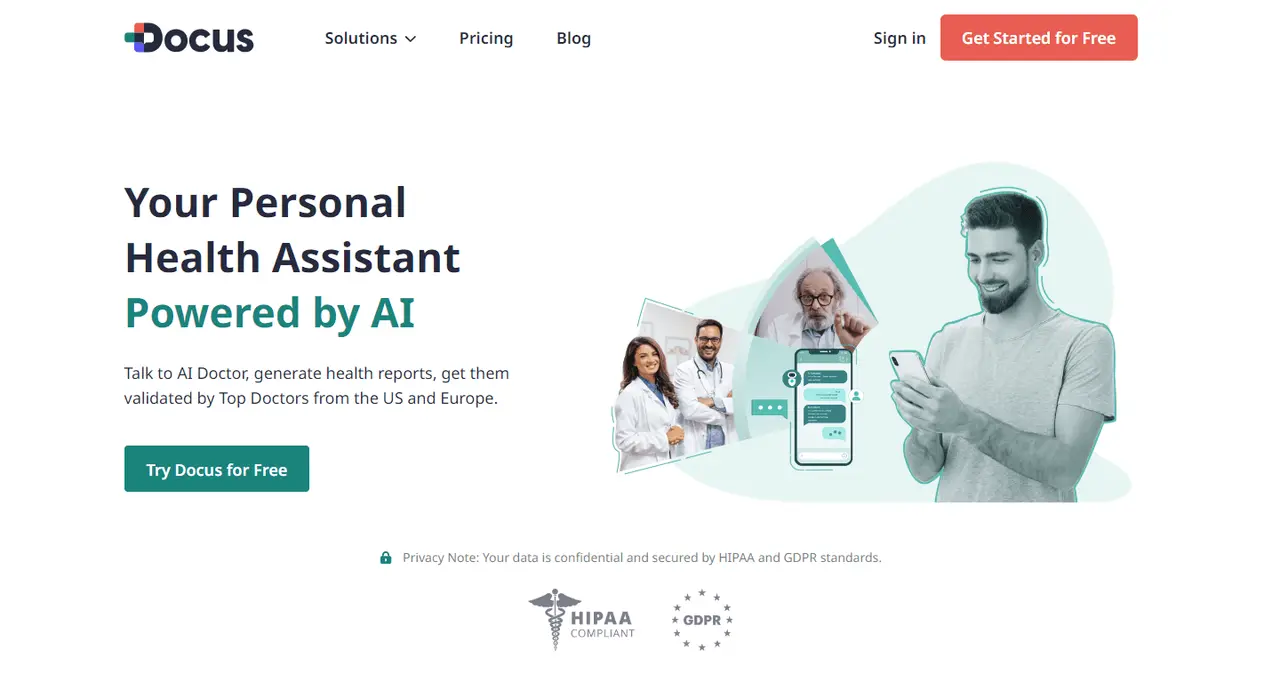
Docus is an AI-powered health platform that combines advanced artificial intelligence with insights from a network of over 350 verified doctors across the US and Europe. The platform enables users to engage with a conversational AI health assistant to discuss symptoms, receive preliminary assessments, and generate personalized health reports. These reports are then reviewed and validated by licensed medical professionals to ensure accuracy and reliability. Designed for accessibility, Docus provides immediate access to healthcare guidance without the need for in-person visits, making it particularly useful for routine inquiries, preventive care, and initial symptom evaluation. The platform emphasizes user-friendly interactions, allowing individuals to input health concerns in natural language and receive structured, actionable insights. By bridging the gap between AI-driven technology and human medical expertise, Docus aims to enhance healthcare accessibility, efficiency, and quality. Its mission centers on delivering preventive and supportive care through a seamless, technology-enabled experience that prioritizes both speed and accuracy.
Docus
Wilmington, United States · Founded 2021
- Founded
- 2021
- Headquarters
- Wilmington, United States
Key features
- Talk to AI Health Assistant
- Generate personalized health reports
- Get expert opinions from top doctors in the US and Europe
- Accessible and user-friendly platform
- Integrates cutting-edge AI technology with medical expertise
- Delivers accurate health assessments and support
Use cases
- Users can talk to Docus AI Health Assistant, generate personalized health reports, and get them validated by top doctors.
- Docus helps users create a more organized treatment plan for chronic diseases such as diabetes.
- The platform provides immediate access to quality healthcare guidance, making healthcare more accessible and efficient.
Pros
- Enhances diagnostic lab efficiency through automated interpretation and follow-up recommendations
- Improves patient retention with timely follow-up notifications and educational reports
- Reduces operational and compliance risks with automated checks for medical necessity and order accuracy
- Supports a wide range of tests, including routine and specialty cases
- Offers flexible integration options, including API/HL7 and standalone interfaces
Cons
- Requires integration with existing lab systems, which may involve technical setup
- Dependence on AI interpretations may still necessitate human oversight for complex cases
- Limited direct-to-consumer functionality compared to broader health platforms
Frequently asked questions about Docus
What is Docus and what does it do?
Docus provides an AI-powered platform for diagnostic laboratories to interpret test results, generate clinical reports, and support compliance with automated checks. It assists doctors in making faster decisions and helps patients understand their results through patient-friendly reports.
Who is Docus designed for?
Docus is designed for diagnostic labs, including direct-to-consumer labs, reference labs, and in-house labs. It also offers solutions for doctors and patients to improve health decision-making and clinical support.
How does Docus help with compliance?
Docus includes an AI Compliance Agent that checks test orders for medical necessity, validates ICD codes, and monitors repeat testing frequency to reduce audit risks and denials. It also provides alerts for labs and doctors when issues are detected.
Can Docus integrate with existing lab systems?
Yes, Docus supports API/HL7 integration to send lab data and receive structured interpretation reports directly in a lab's LIS, CRM, or EHR. It also offers standalone interfaces for labs, doctors, and patients without requiring integration.
What types of tests does Docus support?
Docus supports a wide range of tests, including routine and specialty tests such as pathology, pharmacogenomics (PGx), and infectious disease testing. It provides context-aware analysis using historical test data for deeper insights.
How does Docus ensure data security?
Docus follows enterprise-grade security protocols aligned with HIPAA, GDPR, and SOC 2 requirements. All data is encrypted at every step, and personally identifiable information is not required for core workflows to protect patient privacy.
Docus Website Engagement
Last Update: 9 days ago
Total Monthly Visits
0
Bounce Rate
0%
Visit Duration (avg)
0.00s
Pages Per Visit
0
Country Rank
0
United States
Global Rank
0
Category Rank
#0
Medicine
Monthly Traffic
Traffic Sources
Traffic Share By Country
- United States23.7%
- Canada8.4%
- India6.9%
- United Kingdom5.5%
- Australia4.7%