
OpenAI builds and deploys advanced AI models like GPT-4o for autonomous agents and workflows.

Kubit
$199Starting price
32KMonthly visits
25Popularity
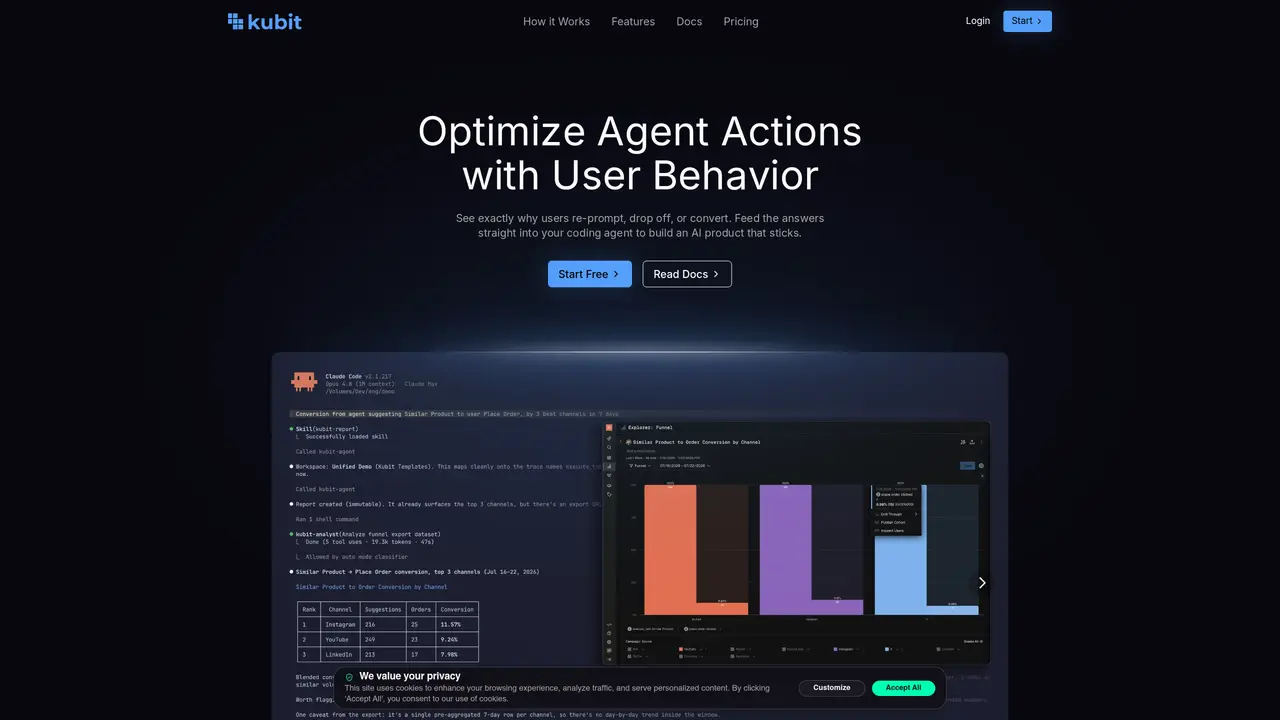
About Kubit
Kubit links AI agent execution traces with user behavior data to diagnose why features succeed or fail. It ingests traces from coding agents and correlates them with clickstream events, A/B tests, and business metrics inside the user’s own data warehouse. The platform enriches traces with intent and sentiment analysis, enabling teams to pinpoint where hallucinations or poor tool calls break conversion flows. It supports headless analytics for coding agents and embeds product analytics into agent loops via MCP for automated verification. Kubit emphasizes open standards such as OpenTelemetry and SQL, avoiding proprietary formats and vendor lock-in. Zero-copy architecture keeps PII and sensitive data within the warehouse, and sampling or filtering can be adjusted without reprocessing. The tool is designed for data analysts, product managers, and engineering teams building AI-powered products.
Key features
- Enrich traces with intent and sentiment analysis
- Measure AI outcomes using user engagement and retention
- Track user-agent funnels and conversion drops
- Map AI journeys including re-prompts and rage clicks
- Build granular cohorts across agent and user data
- Integrate via OpenTelemetry, CDP, or SQL
- Sample, filter, and mask sensitive data
- Embed analytics into agent loops via MCP
Use cases
- Debugging AI agent failures by linking traces to user exits
- Optimizing AI features based on behavioral insights and outcomes
- Automating verification of agent actions using embedded analytics
Pros
- Correlates agent traces with user behavior metrics
- Supports open standards like OpenTelemetry and SQL
- Zero-copy architecture for PII and sensitive data
- Headless analytics for coding agents
- Embeds analytics into agent loops via MCP
Cons
- No free tier beyond 10,000 MTU
- Requires integration with existing warehouse or CDP
- Limited to enterprise-focused pricing tiers
Frequently asked questions about Kubit
What does Kubit do?
Kubit connects AI agent execution traces with user behavior data to diagnose why AI features succeed or fail. It correlates coding agent traces with clickstream events, A/B tests, and business metrics within the user’s data warehouse.
Who is Kubit designed for?
The tool is designed for data analysts, product managers, and engineering teams building AI-powered products who need to understand the impact of AI agent actions on user outcomes.
How does Kubit integrate with existing tools?
Kubit integrates natively via open standards like OpenTelemetry and SQL, allowing users to stream spans, pull events from their CDP, or query their warehouse directly without proprietary formats.
Can Kubit handle sensitive data?
Yes, Kubit uses a zero-copy architecture to ensure PII and sensitive user data never leave the warehouse, maintaining data security and compliance.
What kind of insights can Kubit provide?
Kubit enriches traces with intent and sentiment analysis, tracks user-agent funnels, maps AI journeys, and builds granular cohorts to uncover UX issues and hallucinations impacting conversions.
How do I get started with Kubit?
Users can start by ingesting agent traces via OpenTelemetry, pulling clickstream events from their CDP, or connecting directly to their warehouse, then using Kubit’s SDK or OTel bridge for integration.
Kubit Website Engagement
Last Update: 9 days ago
Total Monthly Visits
0
Bounce Rate
0%
Visit Duration (avg)
0.00s
Pages Per Visit
0
Country Rank
0
United States
Global Rank
0
Category Rank
#0
Programming & Developer Software
Monthly Traffic
Traffic Sources
Traffic Share By Country
- United States63.7%
- India36.3%