OpenAI builds and deploys advanced AI models like GPT-4o for autonomous agents and workflows.

Otter
0Popularity
About Otter
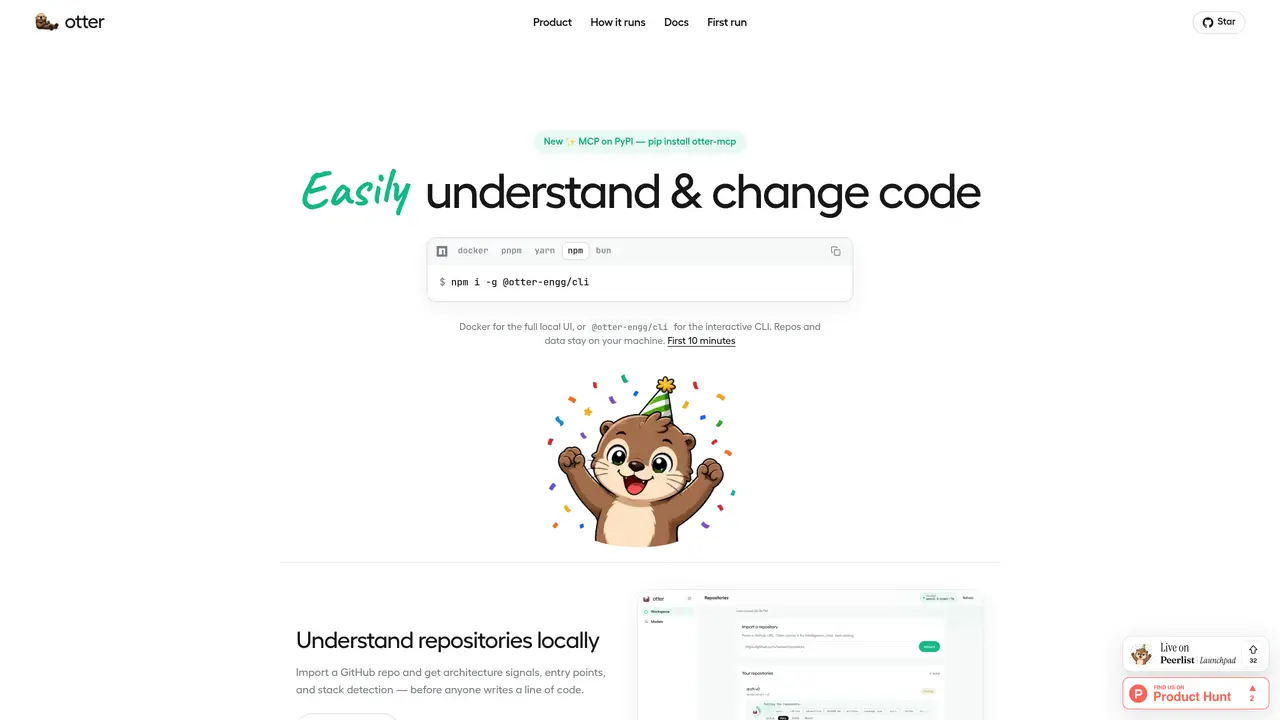
Otter is a local-first tool that helps developers understand and modify codebases without cloud agents or silent writes. It runs entirely on the user’s machine, connecting to a local Ollama instance or any OpenAI-compatible endpoint. The tool first analyzes repositories to detect architecture, entry points, and technology stack before any changes are proposed. Users can then engage in grounded chat that cites real files, plan changes with risk assessments, and generate patches for review. Each patch requires explicit approval before a pull request is opened, ensuring no modifications occur without consent. Otter supports both a full local UI via Docker and an interactive CLI, with repositories and data remaining on the user’s system throughout the process.
Key features
- Local code analysis and architecture detection
- Grounded chat with file citations
- Patch generation with risk assessment
- Approval-gated pull request creation
- Docker and CLI deployment options
- Self-hosting capability
- GitHub App integration for repository access
- Multi-surface support (UI, CLI, MCP)
Use cases
- Understanding unfamiliar codebases before making changes
- Planning and reviewing code modifications with risk analysis
- Generating and approving patches for pull requests
Pros
- Runs entirely on local machine with no cloud agent
- Requires explicit approval before any code modification
- Supports both Docker UI and CLI interfaces
- Grounded chat with real file citations
- Self-hostable with Docker or installable via npm
Cons
- No free tier or cloud-hosted option
- Requires local model setup (Ollama or compatible endpoint)
- Limited to GitHub repositories via GitHub App integration
Frequently asked questions about Otter
What is Otter and how does it work?
Otter is a local-first tool designed to help developers understand and modify codebases without relying on cloud agents or performing silent writes. It operates entirely on the user’s machine, connecting to a local Ollama instance or any OpenAI-compatible endpoint to analyze repositories, detect architecture and technology stack, and enable grounded chat with real file citations.
Who should use Otter?
Otter is suitable for developers and engineering teams who prioritize local control over their code and workflows. It is ideal for those who want to understand large codebases before making changes and prefer approval-gated modifications to avoid unintended alterations.
How do I get started with Otter?
To get started, install Otter either via Docker for the full local UI or the npm CLI for an interactive terminal experience. Connect a local model like Ollama or an OpenAI-compatible endpoint, then import a repository to begin analyzing architecture and planning changes.
Does Otter require cloud services or internet access?
No, Otter runs entirely on the user’s machine and does not require cloud services or internet access for core functionality. Repositories and data remain local throughout the process, ensuring privacy and control.
Can Otter integrate with GitHub?
Yes, Otter can integrate with GitHub by installing the Otter GitHub App, which allows users to import repositories and open pull requests directly from the tool without exposing client secrets on their machine.
What models does Otter support?
Otter supports local models like Ollama or any OpenAI-compatible endpoint. Users can connect their preferred model through a single interface for chat, explanation, and coding tasks.