
OpenAI builds and deploys advanced AI models like GPT-4o for autonomous agents and workflows.

Sequel
$49Starting price
9KMonthly visits
16Popularity
About Sequel
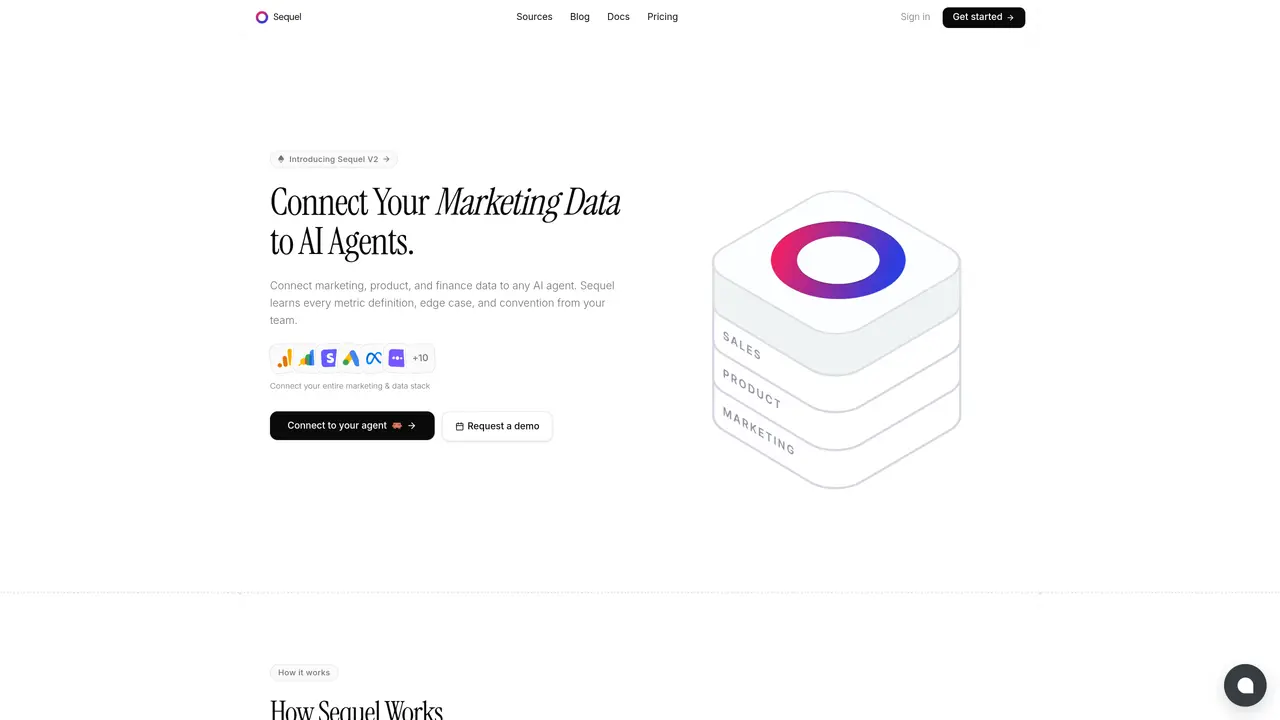
Sequel connects marketing, product, and finance data to AI agents, enabling them to answer questions using live data without manual exports or pipelines. It learns metric definitions, edge cases, and conventions directly from a team’s existing workflows. The tool integrates with over 100 sources including Google Analytics, Meta Ads, HubSpot, Stripe, and Google Sheets, consolidating schemas into a single governed data layer. Agents access data through a secure gateway without handling credentials, while Sequel maintains full audit logs of all queries and actions. Users can build live dashboards and debug issues in plain language without a separate BI tool. The platform supports cross-joining data across databases, warehouses, and product systems, automatically resolving joins and calculations.
Key features
- Connects to 100+ marketing, product, and finance tools
- Secure credential management with agent access via gateway
- Automatic schema consolidation and metric definition learning
- Plain-language dashboards and debugging
- Cross-joining of data across databases and warehouses
- Audit logs for all queries and actions
- Slack integration for team collaboration
- Self-hosted deployment option for Enterprise
Use cases
- Answering marketing performance questions with live data
- Building and debugging dashboards in plain language
- Enabling AI agents to perform cross-system data analysis
Pros
- Unified data layer for marketing, product, and finance sources
- Secure credential handling with agent access via gateway
- Plain-language dashboards and debugging without BI tools
- Cross-joins data across multiple systems automatically
- Audit logs for all queries and actions
Cons
- No free tier beyond basic usage limits
- Requires installation of MCP client
- Limited to integrations listed on the site
- Enterprise plan requires self-hosting
Frequently asked questions about Sequel
What is Sequel and what does it do?
Sequel connects marketing, product, and finance data to AI agents, enabling them to answer questions using live data without manual exports or pipelines. It learns metric definitions and conventions directly from a team’s existing workflows.
Who is Sequel designed for?
Sequel is designed for teams that rely on marketing, product, and finance data, such as marketers, product managers, and finance professionals. It is particularly useful for those who want to leverage AI agents to analyze data without building pipelines.
How does Sequel integrate with existing tools?
Sequel integrates with over 100 sources including Google Analytics, Meta Ads, HubSpot, Stripe, and Google Sheets. It consolidates schemas into a single governed data layer, allowing agents to access data without handling credentials.
Can Sequel be used without a separate BI tool?
Yes, Sequel allows users to build live dashboards and debug issues in plain language without requiring a separate BI tool. It provides a unified view of data and handles joins and calculations automatically.
How do I get started with Sequel?
To get started, install the Sequel MCP into your AI agent with a single command. Then, connect your apps to Sequel by authorizing your analytics, billing, CRM, ad platforms, and warehouse. Finally, ask your agent about your data.
Does Sequel provide audit logs for data access?
Yes, Sequel maintains full audit logs of all queries and actions, ensuring full visibility and traceability of data access and usage.
Sequel Website Engagement
Last Update: 9 days ago
Total Monthly Visits
0
Bounce Rate
0%
Visit Duration (avg)
0.00s
Pages Per Visit
0
Country Rank
0
United States
Global Rank
0
Monthly Traffic
Traffic Sources
Traffic Share By Country
- United States47.5%
- Germany20.5%
- India19.7%
- United Kingdom11.8%
- Canada0.4%