An AI-driven experience management platform for enterprises to collect multi-channel feedback, analyze structured and unstructured data, and deliver actionable insights.

Findly
$149/mStarting price
5.9KMonthly visits
13Popularity
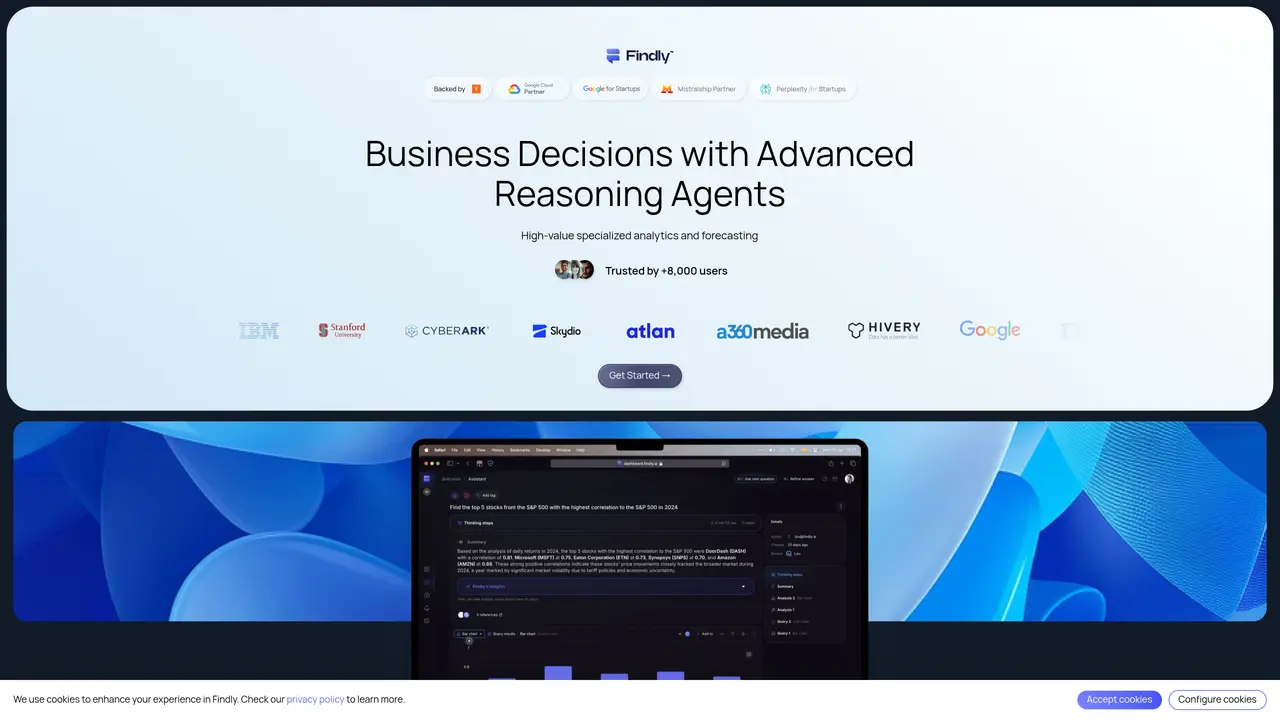
About Findly
Findly is a web-based, chat-driven data analysis platform designed for business teams that need to query databases and data warehouses using natural language. Users can ask questions, drill down into data, and tag conversations for collaboration, all within a conversational interface. The platform connects live to common warehouses and databases such as Snowflake, BigQuery, MySQL, and PostgreSQL, and includes integrations like Google Analytics for seamless data access. It supports visualization and reporting through custom reports, pre-made templates, and exports to formats like Excel and PDF. Findly also offers forecasting capabilities powered by machine learning, enabling users to apply historical data trends to future predictions. Sharing and workflow integration are streamlined via Slack, making it easier to distribute insights across teams. The tool emphasizes reliability through an LLM-based querying system paired with a semantic layer model, and it maintains a strong security and compliance posture, including SOC 2 Type II and ISO 27001 certifications. It also features permission management and private data handling to ensure data governance. Additionally, Findly is available via the Google Cloud Marketplace for broader accessibility and enterprise adoption.
Key features
- Natural language analytics via conversational interface
- Live connections to Snowflake, BigQuery, MySQL, PostgreSQL, and Google Analytics
- Custom reports, pre-made templates, and exports to Excel and PDF
- Machine learning-based forecasting from historical data
- Slack integration for sharing and workflow automation
- Semantic layer model for improved reliability
- SOC 2 Type II and ISO 27001 compliance
- Permission management and private data handling
- Google Cloud Marketplace availability
Use cases
- Automating the generation of business reports from live data
- Enabling non-technical teams to query databases using plain English
- Creating forecasts and insights from historical data trends
Pros
- Enables natural language querying of live databases and warehouses like Snowflake, BigQuery, MySQL, and PostgreSQL
- Provides real-time analytics and predictive insights with machine learning-powered forecasting
- Offers customizable visualization, reporting, and export options (Excel, PDF)
- Includes robust security and compliance certifications (SOC 2 Type II, ISO 27001)
- Supports collaboration through Slack integrations and conversation tagging
Cons
- Requires connection to live data sources, which may introduce latency for complex queries
- Dependent on underlying data quality and structure for accurate results
- Enterprise-focused features may present a learning curve for non-technical users
Frequently asked questions about Findly
What is Findly and what does it do?
Findly is an AI-powered data analysis platform that enables users to query databases and data warehouses using natural language. It transforms complex data into high-value insights through advanced reasoning agents and machine learning, supporting real-time analytics, forecasting, and visualization.
Who should use Findly?
Findly is designed for business teams, consultants, supply chain managers, trading professionals, and e-commerce retailers who need to analyze data, generate forecasts, and make data-driven decisions efficiently.
How does Findly integrate with other tools?
Findly connects with common data warehouses and databases such as Snowflake, BigQuery, MySQL, and PostgreSQL, and supports integrations like Google Analytics and Slack for seamless data access and workflow distribution.
What security and compliance standards does Findly meet?
Findly maintains SOC 2 Type II and ISO 27001 certifications, ensuring robust data privacy, security protocols, and compliance with industry standards for trust and transparency.
Can Findly be used for forecasting and predictive analytics?
Yes, Findly offers forecasting capabilities powered by machine learning, enabling users to apply historical data trends to future predictions and make informed business decisions.
How do I get started with Findly?
Users can start by setting up Findly through the platform's documentation, connecting their databases, and integrating tools like Slack. The process includes configuring data sources and accessing real-time insights.
Findly Website Engagement
Last Update: 9 days ago
Total Monthly Visits
0
Bounce Rate
0%
Visit Duration (avg)
0.00s
Pages Per Visit
0
Country Rank
0
United States
Global Rank
0
Category Rank
#0
Programming & Developer Software
Monthly Traffic
Traffic Sources
Traffic Share By Country
- United States60.4%
- India19.6%
- Brazil18.3%
- Poland1.7%