An AI-driven experience management platform for enterprises to collect multi-channel feedback, analyze structured and unstructured data, and deliver actionable insights.

Foundational
FreeStarting price
9.7KMonthly visits
16Popularity
About Foundational
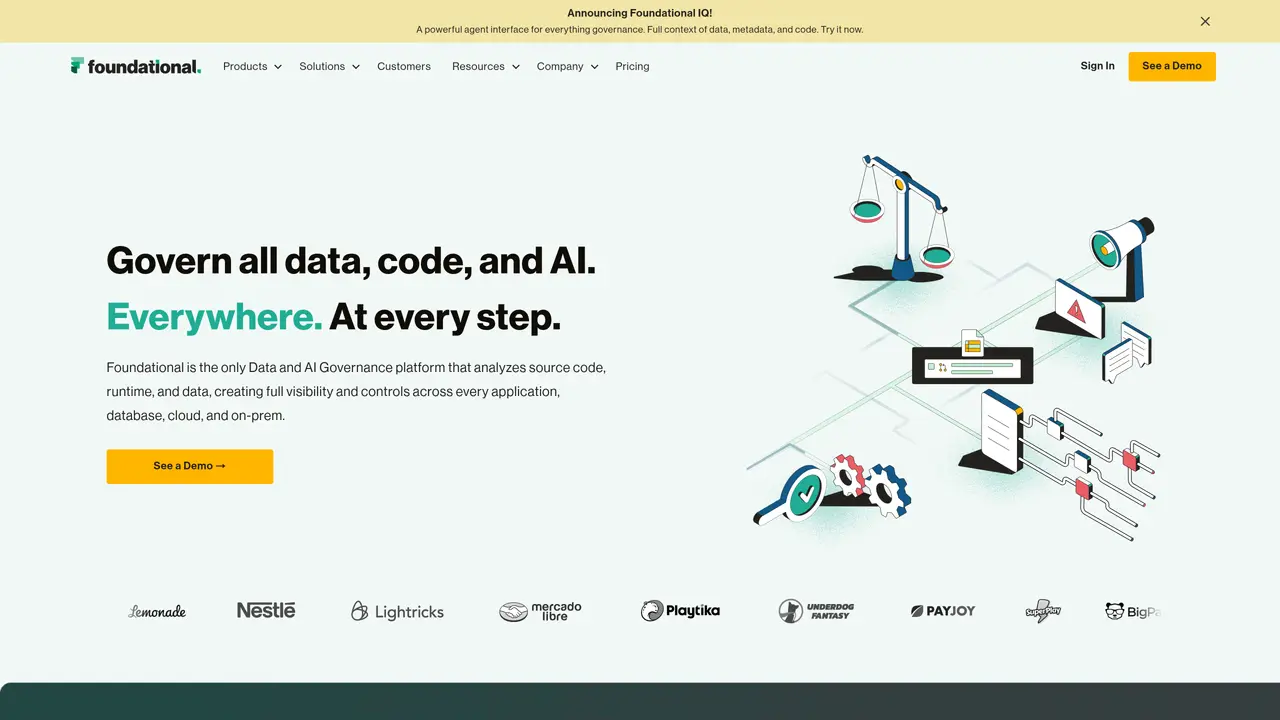
Foundational is a cutting-edge Data Management Platform that seamlessly integrates with developers’ workflows to enhance data quality, governance, and privacy across all stages of the data lifecycle. Designed for data-driven organizations, Foundational aims to prevent data incidents before they occur by providing tools for automated data lineage, data quality monitoring, and data contract enforcement. Key Features: Automated Data Lineage: Offers real-time, column-level visualization of data dependencies from the operational database to the reporting layer. Data Quality Monitoring: Leverages the latest features like Snowflake’s Data Metric Functions to automate data quality checks. Data Contract Enforcement: Analyzes code changes across repositories to ensure compliance with data governance policies. Developer-Friendly Integration: Native GitHub integration for seamless operation within existing development workflows. Real-Time Alerts: Immediate feedback on potential data issues, allowing for proactive management. Pros Enhanced Data Integrity: Ensures high standards of data quality and consistency across all platforms. Increased Developer Efficiency: Saves time by automating routine checks and validations. Improved Compliance: Helps organizations meet strict data governance and privacy standards. Scalability: Adapts to growing data needs without requiring additional development work. Cons Complexity for Beginners: May require a learning curve for teams new to automated data management solutions. Integration Limitations: While extensive, integration capabilities might not cover all potential enterprise tools out-of-the-box. Dependency on Platform Updates: Relies on third-party platform features like Snowflake’s DMF, which may affect flexibility. Who is Using Foundational? Data Engineers: Utilizing the platform to streamline data operations and reduce errors. BI Analysts: Leveraging automated tools to enhance reporting accuracy and speed. IT Security Teams: Employing Foundational to enforce data privacy and compliance standards. Project Managers: Using the tool to monitor and optimize data-related project costs. Uncommon Use Cases: Educational institutions incorporate Foundational in curriculum to teach data governance; non-profits use it to manage donor data efficiently.
Key features
- Automated Data Lineage
- Data Quality Monitoring
- Data Contract Enforcement
- Developer-Friendly Integration
- Real-Time Alerts
- Enhanced Data Integrity
- Increased Developer Efficiency
- Improved Compliance
- Scalability
Use cases
- Streamline data operations and reduce errors for data engineers.
- Leverage automated tools to enhance reporting accuracy and speed for BI analysts.
- Enforce data privacy and compliance standards for IT security teams.
Pros
- Provides deterministic, cross-platform data lineage including support for COBOL and mainframe systems
- Automates governance by analyzing source code, runtime, and data across applications, databases, and AI pipelines
- Enables proactive issue prevention with real-time visibility into data flows and transformations
- Supports AI governance by ensuring traceable, governed data with explainable lineage for model inputs
- Offers data flow visibility and discovery to understand data origins, transformations, and impacts
Cons
- May require significant setup and learning curve for teams unfamiliar with automated data governance
- Integration capabilities, while extensive, may not cover all enterprise tools out-of-the-box
- Relies on third-party platform features and updates, which could affect flexibility and future compatibility
- Complexity in tracking older systems like Oracle, SAP, and mainframe environments may pose challenges
Frequently asked questions about Foundational
What is Foundational and what does it do?
Foundational is a Data and AI Governance platform that analyzes source code, runtime, and data to provide full visibility and controls across applications, databases, cloud, and on-prem environments. It helps organizations understand data origins, transformations, and dependencies to prevent issues before they occur.
Who should use Foundational?
Foundational is designed for data engineers, BI analysts, IT security teams, project managers, and organizations managing complex data ecosystems. It supports teams needing proactive governance, compliance, and visibility across diverse data and AI workflows.
How does Foundational integrate with existing workflows?
Foundational connects directly to source code across applications, databases, ETL jobs, and AI pipelines, including languages like SQL, Python, Java, and .NET. It provides native integrations and supports cross-platform lineage to simplify governance within existing development and data stacks.
What are the main benefits of using Foundational?
Foundational enhances data integrity by providing automated, column-level lineage and real-time visibility into data flows. It improves developer efficiency by automating routine checks, supports compliance with governance policies, and reduces risks associated with incomplete or manual lineage tracking.
Does Foundational support mainframe and legacy systems?
Yes, Foundational offers deterministic lineage and code analysis for mainframe systems, including COBOL, JCL, Copybooks, and DB2. This ensures governance and visibility across both modern and legacy data environments.
How can I get started with Foundational?
Prospective users can request a demo or sign in to explore Foundational’s capabilities. The platform is designed to provide full visibility into data and AI governance, starting with layers that traditional tools often overlook.
Foundational Website Engagement
Last Update: 9 days ago
Total Monthly Visits
0
Bounce Rate
0%
Visit Duration (avg)
0.00s
Pages Per Visit
0
Country Rank
0
United States
Global Rank
0
Monthly Traffic
Traffic Sources
Traffic Share By Country
- United States40.9%
- Israel26.5%
- India21.4%
- United Kingdom11.2%