GitHub hosts HunyuanVideo, Tencent's open-source framework for large-scale video generation models, enabling AI-driven video creation.

Apple Core ML
0Popularity
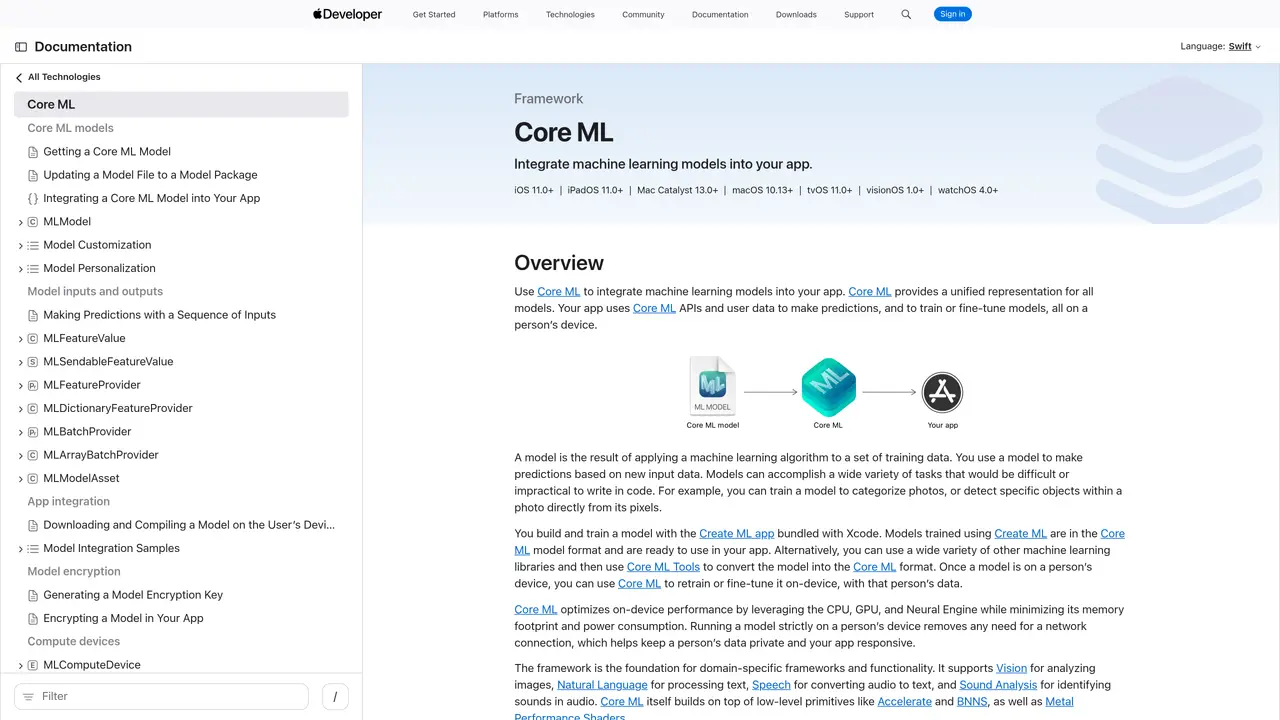
About Apple Core ML
Apple Core ML is a powerful machine learning framework that helps developers create better, smarter apps. With Core ML, developers can leverage the latest advancements in machine learning to create applications that are faster, more accurate, and more efficient. Core ML offers features like a fast and lightweight neural network, automatic model creation, and advanced model optimization for improved performance. It also supports natural language processing, object detection, and image processing, allowing developers to create more powerful and engaging apps. In addition, Core ML also offers easy integration with other Apple technologies, like Siri and Core Image, to provide seamless user experiences. With Core ML, developers can build better, smarter apps that are faster, more accurate, and more efficient, all while leveraging the latest advances in machine learning.
Apple Inc.
Cupertino, United States · Founded 1976
- Founders
- Steve Wozniak, Ronald Wayne
- Founded
- 1976
- Headquarters
- Cupertino, United States
- Legal status
- Public company
Key features
- Fast and lightweight neural network
- Automatic model creation
- Advanced model optimization for improved performance
- Supports natural language processing
- Object detection
- Image processing
Use cases
- Create applications faster with Core ML's fast and lightweight neural network.
- Automatically generate models with Core ML's automatic model creation feature.
- Optimize models for improved performance with Core ML's advanced model optimization.
Pros
- Integrates seamlessly with Apple’s ecosystem, including Siri, Core Image, and other native frameworks
- Optimizes machine learning models for on-device performance, reducing latency and improving efficiency
- Supports a wide range of model types, including neural networks, natural language processing, and computer vision
- Enables offline functionality by running models locally on Apple devices
- Provides tools for model conversion and optimization to ensure compatibility with iOS, macOS, watchOS, and tvOS
Cons
- Limited to Apple platforms, restricting deployment to non-Apple environments
- Requires models to be converted to Core ML format, which may not support all frameworks
- Smaller community and third-party tooling compared to more widely adopted frameworks like TensorFlow or PyTorch
- Performance gains are device-dependent, with older hardware potentially limiting capabilities
Frequently asked questions about Apple Core ML
What is Apple Core ML?
Apple Core ML is a machine learning framework designed to integrate trained models into Apple apps efficiently. It enables developers to add intelligent features such as image recognition, natural language processing, and predictive analytics directly into their applications.
Who should use Core ML?
Core ML is intended for developers building apps for Apple platforms, including iOS, macOS, watchOS, and tvOS. It suits those looking to incorporate machine learning capabilities without requiring deep expertise in model training.
How does Core ML work?
Core ML allows developers to import pre-trained models or create custom ones, then optimizes them for on-device performance. The framework supports integration with Apple technologies like Siri, Core Image, and Vision for enhanced functionality.
What types of models does Core ML support?
Core ML supports a variety of model types, including neural networks, decision trees, and support vector machines. It is compatible with models trained in frameworks like TensorFlow, PyTorch, and scikit-learn.
Can Core ML models run on-device?
Yes, Core ML is optimized to run machine learning models directly on Apple devices, ensuring privacy and performance without requiring constant cloud connectivity.
How do I get started with Core ML?
Developers can start by downloading the Core ML framework from Apple’s developer resources. Apple provides documentation, sample code, and tools to help integrate models into apps seamlessly.