GitHub hosts HunyuanVideo, Tencent's open-source framework for large-scale video generation models, enabling AI-driven video creation.

Neon MCP
$0.07Starting price
0Popularity
About Neon MCP
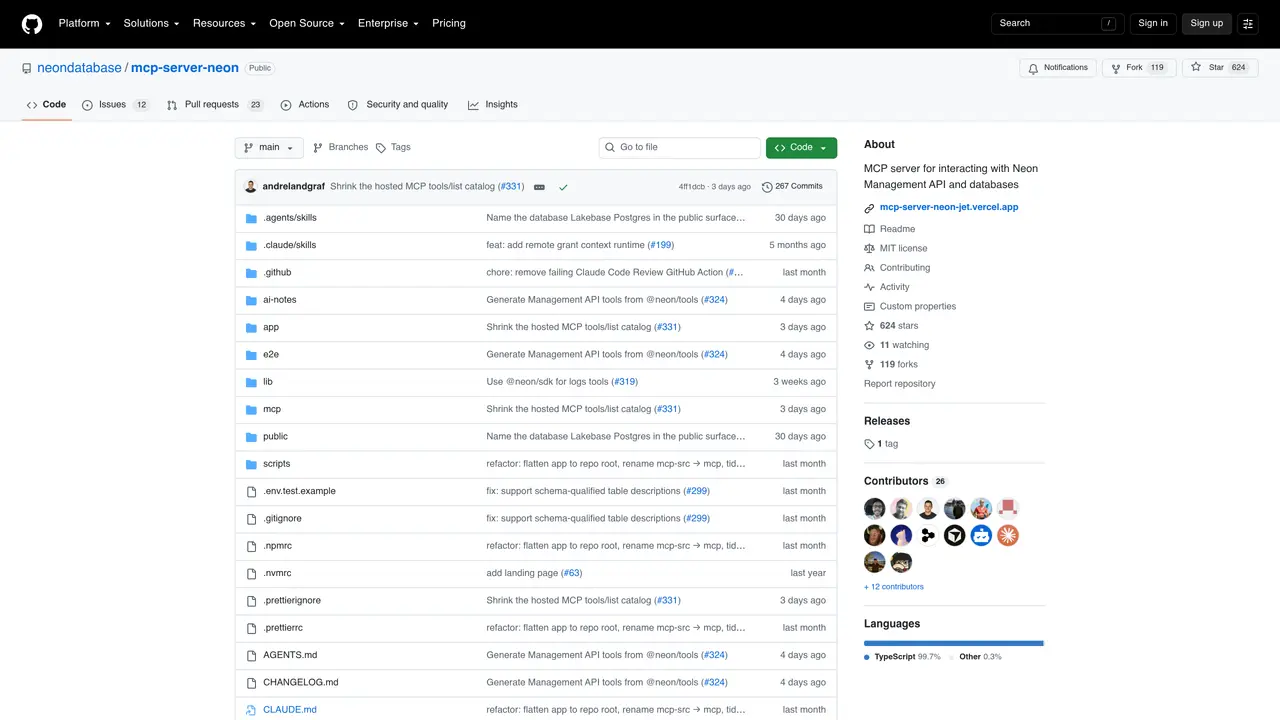
Neon MCP server is an open-source tool that bridges Neon databases with popular AI development environments like Cursor, Claude Desktop, and Windsurf. It enables seamless integration by exposing Neon’s database capabilities through the Model Context Protocol (MCP), allowing AI assistants to interact directly with live database data. Developers can query, modify, and analyze data without leaving their preferred coding environment. The server supports real-time operations, schema introspection, and connection management, making it suitable for AI-driven development workflows. It is particularly useful for teams building applications that rely on Neon’s serverless Postgres features. By providing a standardized interface, it reduces context switching and accelerates iterative development cycles. The tool is designed for developers who want to leverage AI assistance while maintaining direct control over their database interactions.
GitHub, Inc.
San Francisco, California, US · Founded 2008
- Founders
- Tom Preston-Werner, Chris Wanstrath, PJ Hyett, Scott Chacon
- Founded
- 2008
- Headquarters
- San Francisco, California, US
- Legal status
- Subsidiary of Microsoft (NASDAQ: MSFT)
Key features
- Connects Neon databases to Cursor, Claude Desktop, and Windsurf
- Exposes Neon's database capabilities via Model Context Protocol (MCP)
- Supports real-time database queries and modifications
- Enables schema introspection and connection management
- Facilitates AI-assisted development workflows
- Open-source and free to use
- Standardized interface for database interactions
- Reduces context switching between tools
Use cases
- AI-assisted database development in Cursor or Windsurf
- Automated schema analysis and documentation generation
- Real-time data querying and manipulation during AI pair programming
Pros
- Enables natural language interaction with Neon databases via the Model Context Protocol (MCP)
- Simplifies database management by translating conversational commands into API calls and SQL operations
- Supports non-developers and technical users with varying backgrounds in database interaction
- Facilitates database migrations and schema changes through natural language requests
- Integrates seamlessly with popular AI development environments like Cursor, VS Code, and Claude Code
Cons
- Intended for local development and IDE integrations only; not recommended for production environments
- Requires careful authorization of actions due to powerful database management capabilities
- Natural language commands may occasionally misinterpret user intent without manual review
Frequently asked questions about Neon MCP
What is Neon MCP Server?
Neon MCP Server is an open-source tool that bridges Neon databases with AI development environments using the Model Context Protocol (MCP). It allows users to interact with Neon databases in natural language, enabling tasks like creating databases, running queries, and performing migrations.
Who should use Neon MCP Server?
It suits developers, data engineers, and non-technical users who want to manage Neon databases using natural language within their preferred coding environments or AI assistants.
How does Neon MCP Server work?
The server translates natural language requests into Neon API calls or SQL operations, enabling users to perform database tasks without writing code or using the Neon dashboard directly.
Is Neon MCP Server secure for production use?
No, it is designed for local development and IDE integrations only. Production use is discouraged due to the risk of accidental or unauthorized changes from natural language commands.
What AI tools does Neon MCP Server integrate with?
It integrates with AI development environments like Cursor, VS Code, and Claude Code, allowing AI assistants to interact directly with Neon databases.
How do I get started with Neon MCP Server?
You can set it up quickly using the command `neon@latest init`, which configures the server, agent skills, and extensions automatically for supported environments.