
Frontier-grade Claude models with agentic workflows, strong coding, and enterprise guardrails delivered via developer console, web app, and cloud partners.

Elyra
$99Starting price
1.3KMonthly visits
2Popularity
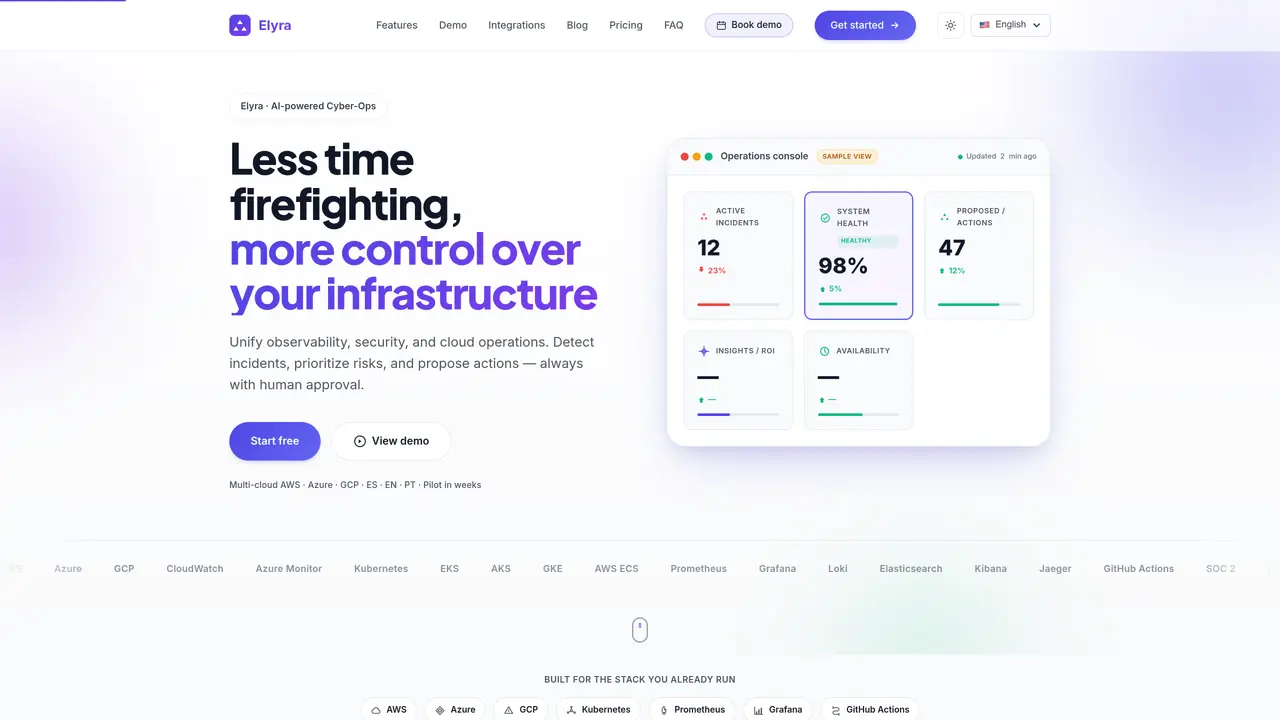
About Elyra
Elyra is an AI-powered Cyber-Ops platform built to assist DevOps and SRE teams in managing cloud infrastructure, reducing alert fatigue, and enhancing operational control. The platform consolidates observability, security, and cloud operations into a unified interface, enabling teams to detect incidents automatically, prioritize risks, and receive proposed remediations while maintaining human oversight for all actions. By integrating with existing tools such as Prometheus, Kubernetes, Grafana, Loki, and CI/CD pipelines, Elyra correlates signals across metrics, logs, deployments, and security data to provide a comprehensive operational context. It leverages large language models like GPT-4 or Claude to perform root cause analysis, helping teams quickly identify and resolve issues. The platform includes a security hub for managing SARIF findings, executive dashboards for tracking ROI metrics, and the ability to export reports in PDF format. Elyra supports multi-cloud environments, including AWS, Azure, and GCP, offering a consolidated view of cloud resources, associated costs, and security posture to streamline management across diverse infrastructures.
Key features
- AI-powered incident detection from Prometheus, Kubernetes, Loki, and CI/CD
- Root cause analysis using GPT-4 or Claude
- Security hub with SARIF findings and domain insights
- Multi-cloud resource mapping and cost optimization
- Executive view with ROI metrics and PDF export
- Git secrets scanning and security posture monitoring
- Human-approved remediation proposals
- Real-time system health and incident tracking
Use cases
- Unifying observability and security data for DevOps teams
- Reducing alert fatigue and improving incident response times
- Optimizing cloud costs and security posture across multi-cloud environments
Pros
- Unifies observability, security, and cloud operations in one interface
- Automatic incident detection and root cause analysis using AI
- Human-in-the-loop approval required for all proposed actions
- Multi-cloud support for AWS, Azure, and GCP
- Executive dashboards with ROI metrics and PDF export
Cons
- Pilot program only, not fully released
- Requires integration with existing monitoring and security tools
- Limited to DevOps and SRE teams in specific regions
Frequently asked questions about Elyra
What does Elyra do?
Elyra is an AI-powered Cyber-Ops platform that unifies observability, security, and cloud operations into a single interface for DevOps and SRE teams. It automatically detects incidents, prioritizes risks, and proposes remediations while requiring human approval for all actions.
Who is Elyra designed for?
Elyra is built for DevOps and SRE teams who need to reduce alert fatigue and improve infrastructure control. It is particularly useful for teams managing multi-cloud environments and those seeking to consolidate operational tools.
How does Elyra integrate with existing tools?
Elyra integrates with tools like Prometheus, Kubernetes, Grafana, Loki, CI/CD pipelines, and cloud providers such as AWS, Azure, and GCP. It analyzes operational context by correlating signals across metrics, logs, deployments, and security data.
Does Elyra require human approval for actions?
Yes, Elyra always requires human approval before executing any proposed actions, ensuring no destructive changes are made without oversight.
What kind of root cause analysis does Elyra provide?
Elyra uses large language models like GPT-4 or Claude to perform root cause analysis, providing detailed insights into incidents and proposed remediations.
Can Elyra help with security and compliance?
Yes, Elyra includes a security hub for SARIF findings, tracks security domains, and provides executive dashboards with security posture metrics and PDF exports for reporting.
Elyra Website Engagement
Last Update: 9 days ago
Total Monthly Visits
0
Bounce Rate
0%
Visit Duration (avg)
—
Pages Per Visit
0
Country Rank
—
Unknown
Global Rank
0