
Unleash creativity: edit photos, videos, and designs with AI-enhanced tools.

Figma Make
$3/mStarting price
0Popularity
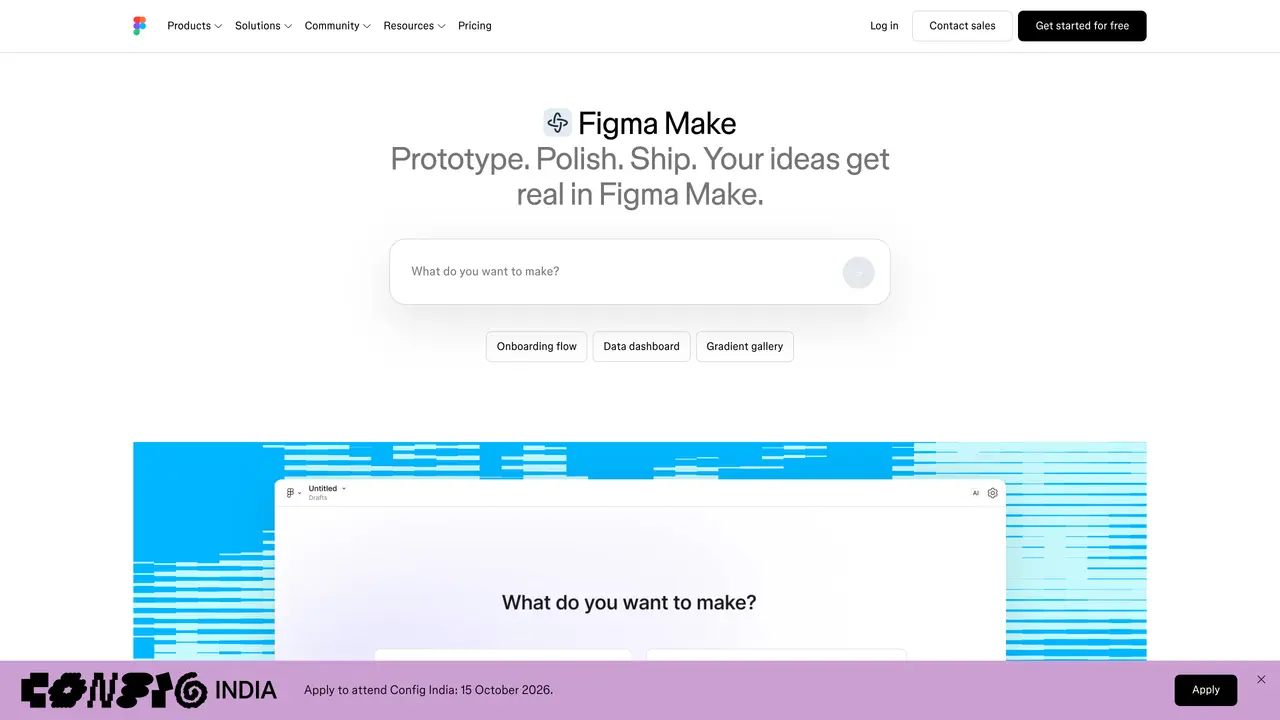
About Figma Make
Figma Make transforms static Figma designs or simple text prompts into interactive prototypes and web applications quickly. It accelerates the prototyping process by converting existing designs into dynamic, functional interfaces without requiring manual coding. The tool supports real-time collaboration, enabling designers and product teams to iterate and refine prototypes together. It also allows for easy data connections, making it suitable for creating prototypes that simulate real-world user flows. Figma Make is particularly useful for generating prototypes for user testing, including those with working chatbot integrations. It is designed to streamline workflows for UI designers, UX researchers, product managers, and developers who rely on Figma’s ecosystem for their design and prototyping needs.
Key features
- Converts static Figma designs into interactive prototypes
- Generates prototypes from simple text prompts
- Supports real-time collaboration for teams
- Enables easy data connections for realistic prototypes
- Creates prototypes with working chatbot integrations
- Allows quick rewriting of UI copy
- Generates interactive site animations
- Removes image backgrounds automatically
- Converts mockups into web applications
- Integrates with Figma's paid plans for advanced features
Use cases
- Transform Figma designs into interactive prototypes for user testing
- Convert mobile app mockups into functional web apps
- Generate animated prototypes from static designs
Pros
- Converts Figma designs or prompts into interactive prototypes and web applications without manual coding
- Supports real-time collaboration for teams to iterate and refine prototypes together
- Enables easy data connections to simulate real-world user flows in prototypes
- Allows designers to work locally in their preferred codebase while maintaining visual editability
- Provides design context integration through Make kits, npm packages, and attachments like Figma frames or PDFs
Cons
- Beta features like local codebase conversion may have limited stability or availability
- Requires familiarity with Figma’s ecosystem for optimal use
- Some advanced features like MCP connectors and custom skills may have a learning curve
Figma Make videos
Frequently asked questions about Figma Make
What is Figma Make and how does it work?
Figma Make is an AI-powered tool that converts static Figma designs or text prompts into interactive prototypes and web applications. It allows users to generate code-backed prototypes directly within Figma, enabling real-time collaboration and iterative refinement.
Who should use Figma Make?
Figma Make is designed for UI designers, UX researchers, product managers, and developers who work within the Figma ecosystem. It suits teams looking to accelerate prototyping, streamline workflows, and bridge the gap between design and development.
Can Figma Make integrate with external tools or data sources?
Yes, Figma Make supports MCP connectors to integrate with external tools, allowing users to incorporate documents, tasks, and data from other applications as context for their prototypes or apps.
Does Figma Make require coding knowledge to use?
No, Figma Make is designed to be accessible without requiring manual coding. Users can generate prototypes from prompts or existing designs, though advanced users can leverage local codebases or custom skills for more control.
How can I get started with Figma Make?
Users can start with Figma Make by accessing it directly within Figma. It offers features like voice-to-text prompting, attachments for context, and templates to streamline the creation process. Documentation and guides are available to help users begin.
What types of files or assets can I attach to Figma Make prompts?
Figma Make allows users to attach a variety of files to prompts, including Figma frames, PDFs, images, videos, audio, and text files. This helps guide the AI toward generating more accurate and context-aware prototypes.