
AI-powered medical search engine that delivers synthesized, cited answers from peer-reviewed research for clinicians.

Paige AI
12KMonthly visits
18Popularity
About Paige AI
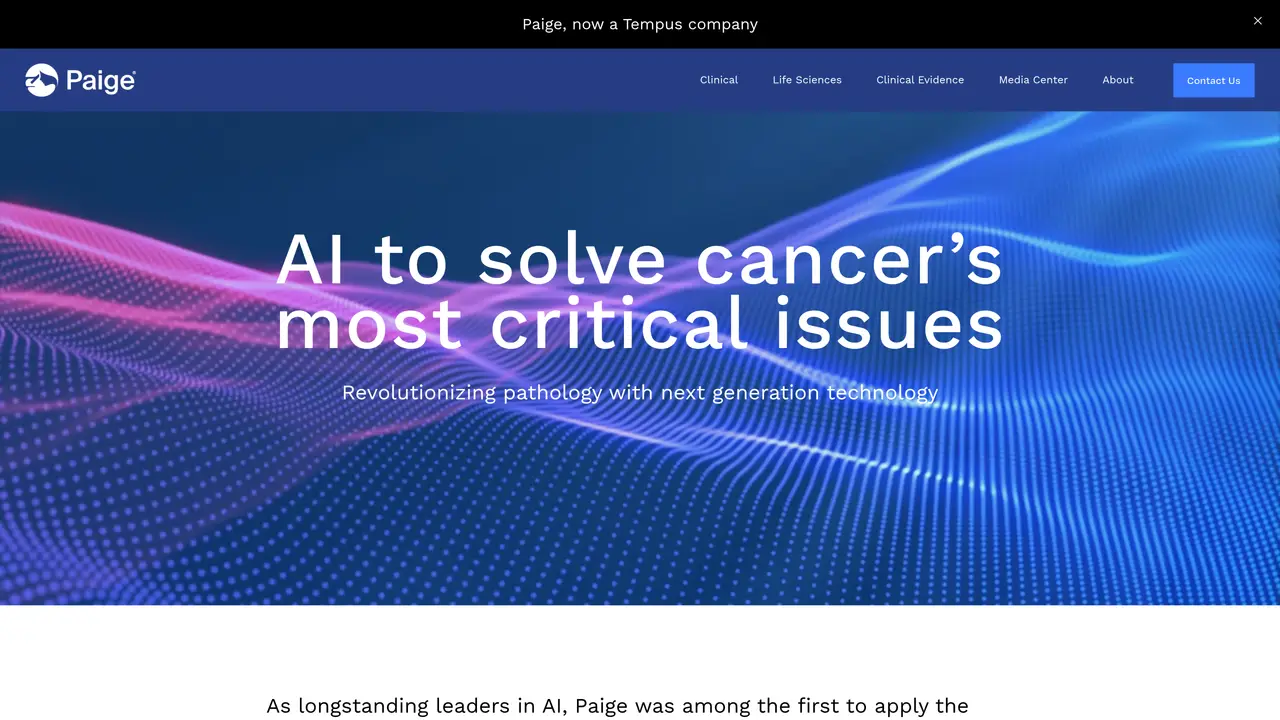
Paige develops AI technology for cancer care, focusing on pathology workflows and molecular biomarker discovery from tissue samples. The company provides diagnostic AI applications that assist in cancer detection, subtyping, and biomarker identification using H&E-stained whole-slide images. Paige’s offerings include specialized suites for prostate, breast, gastrointestinal, and pan-cancer applications, all built on foundation models trained on large datasets. These AI tools are designed to support pathologists by reducing workload pressures while maintaining diagnostic quality. In addition to diagnostic applications, Paige licenses its foundation models and provides custom AI development services, regulatory strategy, and commercialization support for life sciences organizations.
Key features
- Prostate cancer detection and diagnosis on H&E slides
- Breast cancer identification and classification
- Gastrointestinal tract pathology support
- Pan-cancer biomarker identification
- Foundation models for AI development
- Custom AI model development services
- Regulatory strategy and commercialization support
- Multi-modal co-pilot for pathologists
Use cases
- Cancer detection and diagnosis in pathology labs
- Molecular biomarker discovery for therapeutic targeting
- Development of AI-powered pathology applications
Pros
- Foundation models trained on over 1.5 million slides
- Specialized AI suites for multiple cancer types
- Supports biomarker discovery directly from tissue samples
- Provides custom AI development and regulatory services
- Multi-modal co-pilot for pathology workflows
Cons
- No free tier or public API access mentioned
- Focused exclusively on cancer pathology
- Requires licensing for most advanced features
- Limited to tissue-based diagnostics
Frequently asked questions about Paige AI
What is Paige AI and what does it do?
Paige AI develops AI technology specifically for cancer care, focusing on pathology workflows and molecular biomarker discovery from tissue samples. The company provides diagnostic AI applications that assist in cancer detection, subtyping, and biomarker identification using H&E-stained whole-slide images.
Who is Paige AI designed for?
Paige AI is designed for pathologists and life sciences organizations, including those in clinical diagnostics, research, and drug development. Its tools support cancer detection, classification, and biomarker discovery to improve diagnostic efficiency and accuracy.
What are Paige AI's foundation models?
Paige offers foundation models such as Virchow, Virchow2, Virchow2G, and PRISM, which are trained on large datasets of tissue samples. These models power diagnostic applications and can be licensed for custom AI development in computational pathology.
What diagnostic AI applications does Paige provide?
Paige provides specialized AI suites for prostate, breast, gastrointestinal, and pan-cancer applications. These include tools like Paige Prostate Suite, Paige Breast Suite, Paige GI Suite, and Paige PanCancer Suite, all designed to assist pathologists in cancer detection and diagnosis.
How does Paige Alba work?
Paige Alba is a multi-modal co-pilot that integrates AI with voice and text commands to streamline pathology workflows. It provides real-time insights and optimized workflows to support cancer detection and diagnosis, built on Paige’s diagnostic and biomarker applications.
Can Paige AI's technology be customized for specific needs?
Yes, Paige offers custom AI development services, including the development of prognostic or predictive applications, regulatory strategy, and commercialization support. Organizations can license Paige’s foundation models to build tailored AI solutions for their research and development goals.
Paige AI Website Engagement
Last Update: 20 hours ago
Total Monthly Visits
0
Bounce Rate
0%
Visit Duration (avg)
0.00s
Pages Per Visit
0
Country Rank
0
United States
Global Rank
0
Category Rank
#0
Biology
Monthly Traffic
Traffic Sources
Traffic Share By Country
- United States86.2%
- Brazil8.2%
- Canada2.5%
- Vietnam2.1%
- Italy1%