
Meta AI enhances machine learning, NLP, and computer vision capabilities.

VRAMGlass
$1Starting price
0Popularity
About VRAMGlass
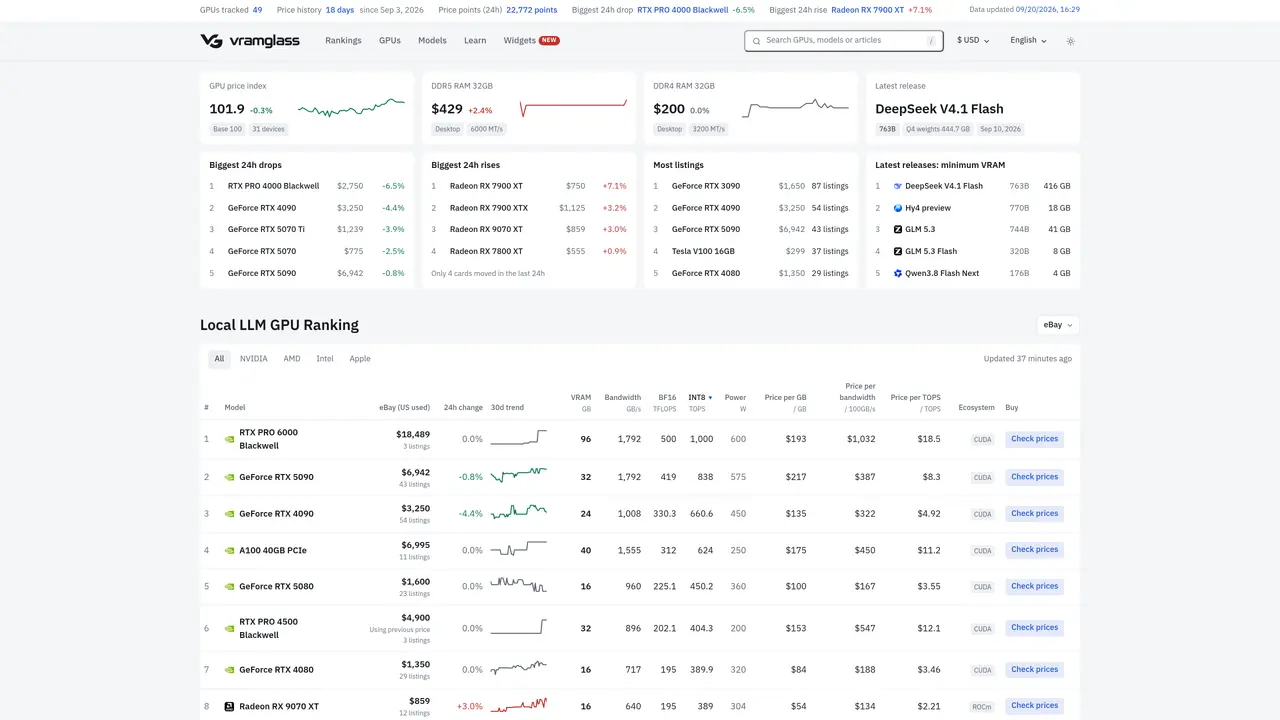
VRAMGlass aggregates and displays pricing and technical specifications for graphics processing units (GPUs) used to run large language models (LLMs) locally. The platform tracks VRAM capacity, memory bandwidth, floating-point performance, and power consumption across a wide range of NVIDIA, AMD, Intel, and Apple GPUs. It provides real-time price data from multiple marketplaces including eBay, Amazon, and regional platforms, allowing users to compare historical trends and current availability. The site also lists recent LLM releases with their minimum VRAM requirements to help users select compatible hardware. Rankings are updated frequently and include metrics such as price per GB of VRAM and price per unit of performance. The tool focuses on assisting developers and researchers in making informed purchasing decisions for local AI workloads.
Key features
- GPU price tracking across multiple regions
- VRAM capacity and bandwidth specifications
- Performance metrics (BF16, INT8 TOPS)
- Historical price trend analysis
- Minimum VRAM requirements for LLMs
- Multi-brand GPU comparison (NVIDIA, AMD, Intel, Apple)
- Real-time price updates
- Affiliate-linked purchasing options
Use cases
- Selecting GPUs for local LLM inference
- Comparing hardware costs for AI workloads
- Evaluating VRAM requirements for new model releases
Pros
- Aggregates GPU prices and specs from multiple marketplaces
- Tracks VRAM capacity and performance metrics for LLM compatibility
- Provides real-time price history and 24-hour changes
- Lists minimum VRAM requirements for recent LLM releases
- Supports multiple GPU brands and architectures
Cons
- Limited to GPU hardware comparisons with no additional AI tooling
- Price data relies on third-party marketplaces with affiliate links
- No mobile or API access mentioned
Frequently asked questions about VRAMGlass
What is VRAMGlass and what does it do?
VRAMGlass is a platform that aggregates and displays pricing and technical specifications for GPUs used to run large language models (LLMs) locally. It tracks VRAM capacity, memory bandwidth, floating-point performance, and power consumption across various GPUs, providing real-time price data from multiple marketplaces.
Who is VRAMGlass designed for?
The tool is designed for developers and researchers who need to select compatible hardware for running LLMs locally. It helps them make informed purchasing decisions by comparing GPUs based on performance metrics and pricing.
Does VRAMGlass provide historical price data?
Yes, VRAMGlass tracks historical price trends and current availability, allowing users to compare GPU prices over time. It also highlights recent price drops or rises for specific models.
How does VRAMGlass help with LLM compatibility?
VRAMGlass lists recent LLM releases alongside their minimum VRAM requirements, enabling users to identify GPUs that meet the hardware needs of specific models. This ensures compatibility for local AI workloads.
Can I find GPUs from different manufacturers on VRAMGlass?
Yes, VRAMGlass includes GPUs from NVIDIA, AMD, Intel, and Apple, providing a comprehensive comparison across multiple brands and platforms.
How often is the data on VRAMGlass updated?
The rankings and price data on VRAMGlass are updated frequently, with the latest information available within hours. The platform also provides price history spanning several days.