AI assistant for safe, reliable productivity with code, collaboration, and integrations.

Climate Seal
$299/moStarting price
0Popularity
About Climate Seal
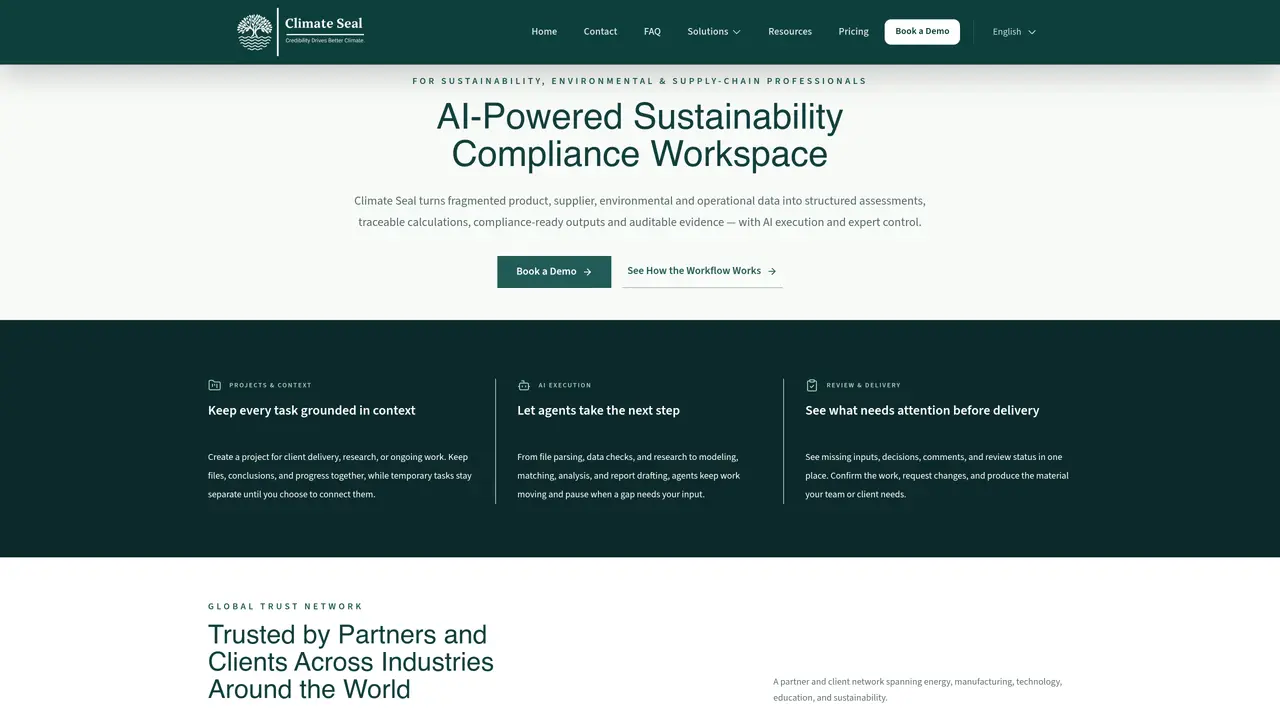
Climate Seal provides a structured workspace designed for sustainability, environmental, and supply-chain professionals to convert fragmented product, supplier, environmental, and operational data into compliance-ready outputs. The platform integrates data collection, assessment models, AI-driven processing, and expert review into a unified workflow that supports corporate reporting, product requirements, market access rules, and industry methodologies. Users can upload a variety of file types, including specifications, Excel sheets, PDFs, energy records, transport data, and supplier files, which the system parses into structured inputs while flagging missing or unclear items. AI agents automate tasks such as file parsing, data validation, research, modeling, matching, and report drafting, pausing when expert input is required for methodology decisions or data confirmation. The workflow maps data to relevant standards, regulations, and factor sources, tracks match quality, risk levels, and review status, and generates client-ready reports alongside a complete evidence ledger that records sources, calculations, assumptions, and decisions. This approach is particularly suited for teams managing environmental and carbon data across products, suppliers, business units, or compliance programs, enabling efficient and scalable reporting while maintaining traceability and governance across complex supply chains and regulatory landscapes.
Key features
- File intake and AI clarification for specifications, Excel, PDFs and supplier data
- Structured assessment models with expert-controlled methodology and review decisions
- Requirement mapping to standards, regulations and factor sources with rationale and risk levels
- AI-driven parsing, modeling, matching and draft report generation
- Complete evidence ledger recording sources, calculations, assumptions and decisions
- Multi-regulation support for corporate reporting, product requirements and market access rules
- Supplier data collection and management workflows
- Reusable product data models and custom factor databases
Use cases
- Corporate carbon footprint and sustainability reporting
- Product life-cycle assessments and environmental product declarations
- Supplier environmental data collection and compliance verification
Pros
- Structures fragmented sustainability data into compliance-ready outputs
- Supports multiple regulations, standards and methodologies in one workspace
- AI agents automate parsing, research and draft report generation while allowing expert review
- Maintains full traceability with source files, calculations and evidence ledger
- Adaptable to corporate reporting, supplier data collection and multi-product workflows
Cons
- No free tier; all plans require conversation with the team before starting
- Pricing is credit-based with additional costs for extra processing
- Limited to sustainability and compliance use cases
- Enterprise plans require custom scoping discussions
Frequently asked questions about Climate Seal
What does Climate Seal do?
Climate Seal transforms fragmented environmental, product, supplier, and operational data into compliance-ready outputs through a structured, AI-assisted workflow. It supports corporate reporting, product requirements, market access rules, and industry methodologies by organizing data collection, assessment, and expert review into a single process.
Who is Climate Seal designed for?
The platform is designed for sustainability, environmental, and supply-chain professionals, including consultants, experts, small teams, and enterprise organizations managing environmental and carbon data across products, suppliers, or compliance programs.
How does Climate Seal handle pricing?
Climate Seal offers multiple pricing plans, including a free trial for testing data readiness and report structure, a professional monthly subscription starting from a base tier, and custom enterprise plans for larger organizations with complex needs. Pricing depends on factors such as data readiness, delivery goals, and collaboration complexity.
What integrations or data formats does Climate Seal support?
The platform supports uploading various file types, including specifications, Excel sheets, PDFs, energy records, transport data, and supplier files. It parses these into structured inputs while identifying gaps or unclear items, and maps data to relevant standards, regulations, and factor sources.
What are the main limitations of Climate Seal?
Climate Seal requires expert input for methodology decisions and data confirmation, which may slow down fully automated workflows. The effectiveness of the platform also depends on the clarity and readiness of the input data, as unclear or fragmented data can impact processing speed and output quality.
How do I get started with Climate Seal?
Prospective users can start with a free trial to test Climate Seal's capabilities, or contact the team to discuss their report scope, data readiness, and determine the best pricing plan. All trials and subscriptions begin after an initial conversation to assess fit and requirements.