AI assistant for safe, reliable productivity with code, collaboration, and integrations.

Rafter
$29Starting price
0Popularity
About Rafter
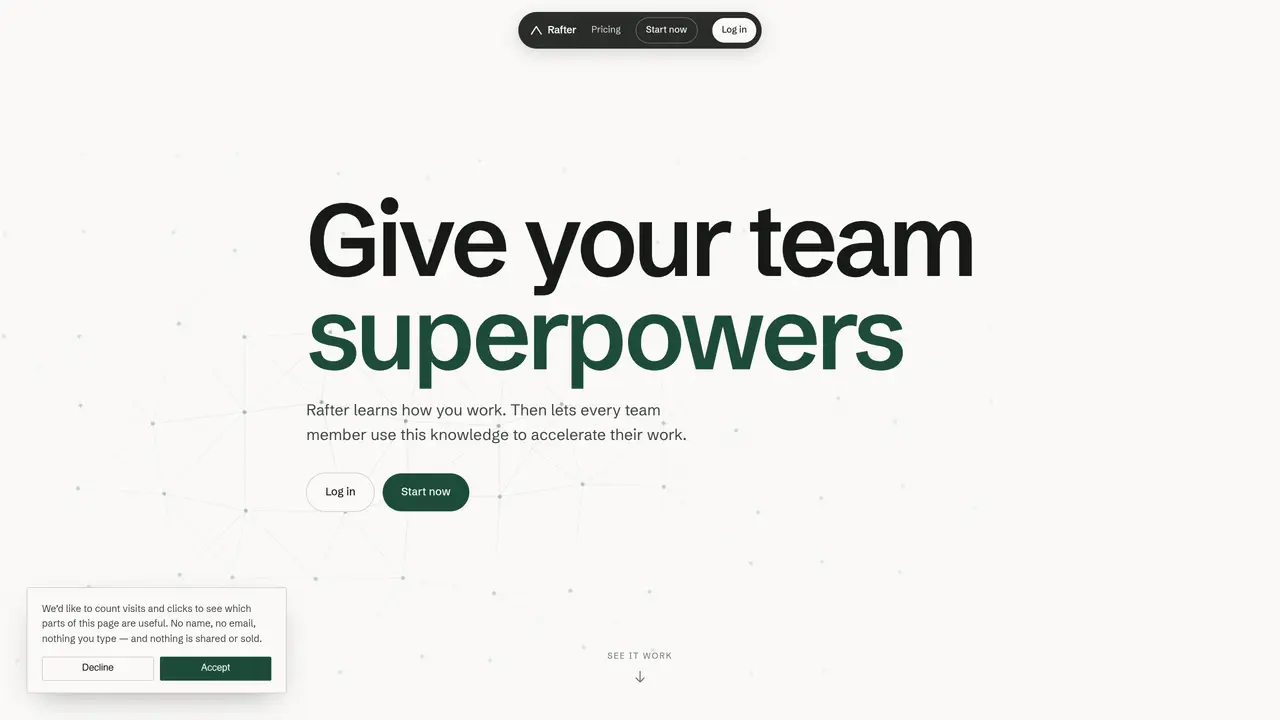
Rafter captures how a team performs recurring tasks and makes this knowledge available to all members through natural language queries. One team member demonstrates a workflow once, and the system learns the steps, tools, and context involved. Other users can then ask questions in plain language to retrieve the correct procedure, reducing repetitive explanations and accelerating onboarding. The tool integrates with existing AI platforms and productivity software via MCP connectors, allowing teams to search shared memories and skills directly from their current workflows. It supports versioning of procedures so teams can track changes and revert if needed. Typical use includes month-end financial close processes, client onboarding workflows, and recurring operational tasks where consistency and documentation matter.
Key features
- Memory storage for decisions and context
- Skills for reusable workflows
- Agents for automated task execution
- Connected search across integrated tools
- Version history and rollback
- Connector support for Jira, Confluence, SharePoint, Drive
- Natural language query interface
- Audit log export on Pro plan
Use cases
- Standardizing month-end financial processes
- Onboarding new clients with documented workflows
- Training teams on recurring operational tasks
Pros
- Captures team knowledge in a reusable format
- Integrates with existing AI tools and platforms
- Supports version history and rollback of procedures
- Free tier available for small teams
- Enables faster onboarding of new team members
Cons
- Requires MCP-compatible AI tools for full functionality
- No mobile or standalone application
- Limited to three users on the free plan
Frequently asked questions about Rafter
What does Rafter do?
Rafter captures how a team performs recurring tasks and stores this knowledge in a shared memory. Users can query this memory in natural language to retrieve documented procedures, reducing repetitive explanations and speeding up onboarding.
Who is Rafter designed for?
Rafter is designed for teams that rely on recurring workflows, such as finance, operations, or client services, where consistency and documentation are critical.
How does Rafter learn workflows?
A team member demonstrates a workflow once, and Rafter records the steps, tools, and context involved. The system then makes this knowledge accessible to others through natural language queries.
Can Rafter integrate with other tools?
Yes, Rafter integrates with existing AI platforms and productivity software via MCP connectors, allowing teams to search shared memories directly from their current workflows.
Does Rafter support versioning of procedures?
Yes, Rafter supports versioning of procedures, enabling teams to track changes and revert to previous versions if needed.
How do I get started with Rafter?
To get started, a team member demonstrates a workflow once, and Rafter begins capturing the process. Other team members can then query the shared memory using natural language to retrieve the documented procedure.