Generate lifelike human videos with AI, making professional video creation fast and accessible for any user.

Frame to video
$13/mStarting price
0Popularity
About Frame to video
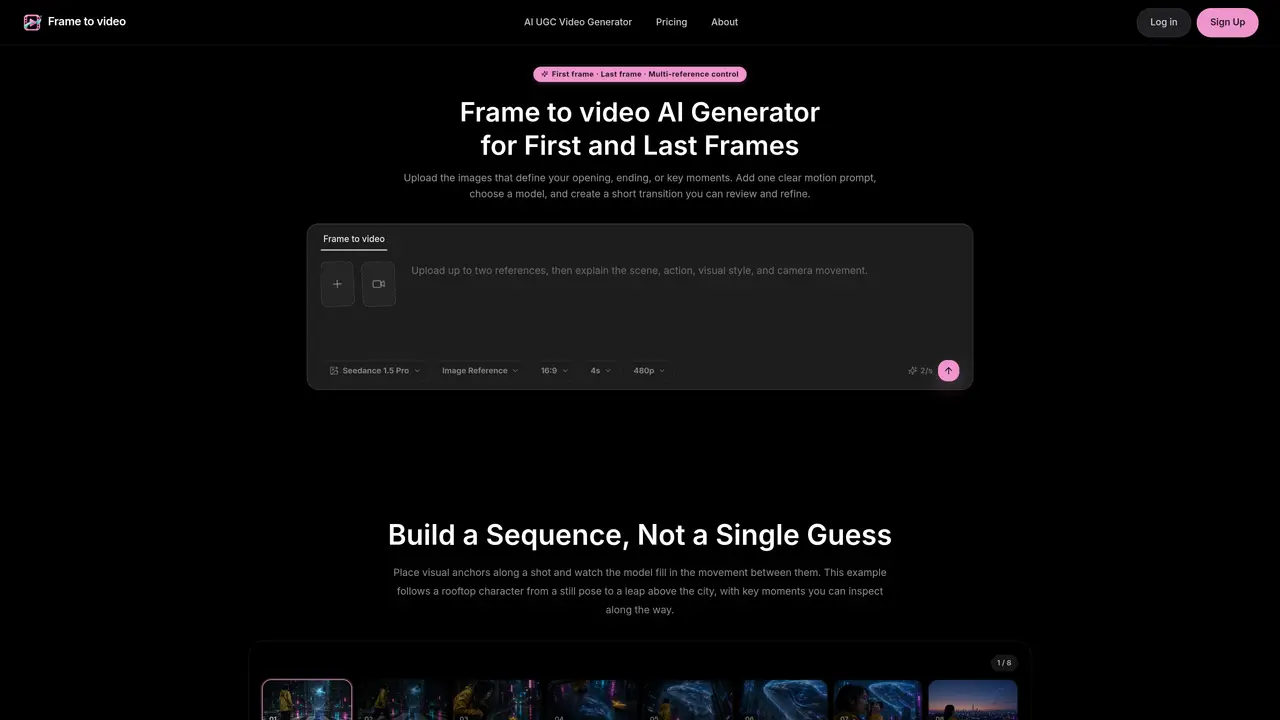
Frame to video is an AI tool that creates short video transitions from a series of still images and a motion prompt. Users upload an opening image, a closing image, and optionally intermediate reference frames to define key moments in a shot. A plain-language prompt describes the subject’s action, camera movement, pace, and lighting, guiding the AI to generate a smooth transition between the visual anchors. The workflow emphasizes control by allowing users to set the number and placement of reference images, which helps maintain consistency in identity, framing, and style. Generated clips are reviewed in a history panel before export, with settings such as aspect ratio, duration, and quality determined by the selected model. The tool is designed for creators and teams who need to test motion direction before committing to full production, such as storyboarding, product reveals, or social media cuts. Outputs are typically used as drafts or motion studies to inform further animation or editing passes.
Key features
- Upload first and last frame images
- Add intermediate reference images for complex shots
- Plain-language motion prompts for subject and camera direction
- History panel for reviewing and rerunning clips
- Adjustable aspect ratios including 9:16 and 16:9
- Batch generation for multiple clips
- Model selection for different quality and style options
- Queue priority settings for faster processing
Use cases
- Storyboarding for animation or live-action projects
- Testing product reveal transitions before full production
- Creating social media clips for Reels, TikTok, and Shorts
Pros
- Supports multiple reference images for structured transitions
- Allows plain-language prompts to describe motion and camera direction
- Provides history panel for reviewing and rerunning generated clips
- Offers adjustable aspect ratios including vertical for social platforms
- Includes commercial usage rights in paid plans
Cons
- Requires at least one paid plan for commercial use
- Output quality and limits depend on the selected model
- No free tier or trial credits mentioned
Frequently asked questions about Frame to video
What is Frame to Video and how does it differ from standard image-to-video tools?
Frame to Video is a reference-led AI tool that generates short video transitions between still images by using a plain-language motion prompt. Unlike standard image-to-video, it allows users to upload an opening image, a closing image, and optional intermediate reference frames to define key moments, providing more control over the generated motion.
Who should use Frame to Video?
The tool is designed for creators, storytellers, product teams, and social media producers who need to test motion direction before committing to full production. It is particularly useful for storyboarding, product reveals, scene transitions, and social media content creation.
How do I create a video from two or more images using Frame to Video?
Upload an opening image and a final image to define the start and end of the shot. Optionally, add intermediate reference frames to mark key moments like pose changes or camera angles. Write a motion prompt describing the subject's action, camera movement, pace, and lighting, then select a model, aspect ratio, duration, and quality before generating the clip.
Can I use only an opening and closing frame, or do I need intermediate references?
Two images are sufficient for simple transitions, such as a product reveal or scene change. For more complex shots involving pose changes, camera angles, or setting shifts, adding intermediate references helps guide the AI and maintain consistency in the output.
What should I include in the motion prompt to get the best results?
Start by naming the subject and its main action, then add details about camera movement, pace, lighting, and any elements that should remain recognizable, such as product shape or art direction. Keeping the prompt focused on one transition typically yields better results.
Can Frame to Video generate vertical clips for social media platforms like TikTok or Instagram Reels?
Yes, users can select an aspect ratio of 9:16 for vertical social media content or 16:9 for landscape video, presentations, or websites. The tool supports different ratios to accommodate various output needs.