
Build teams of AI agents that collaborate, automate workflows, and complete complex tasks together.

Camunda
229KMonthly visits
39Popularity
About Camunda
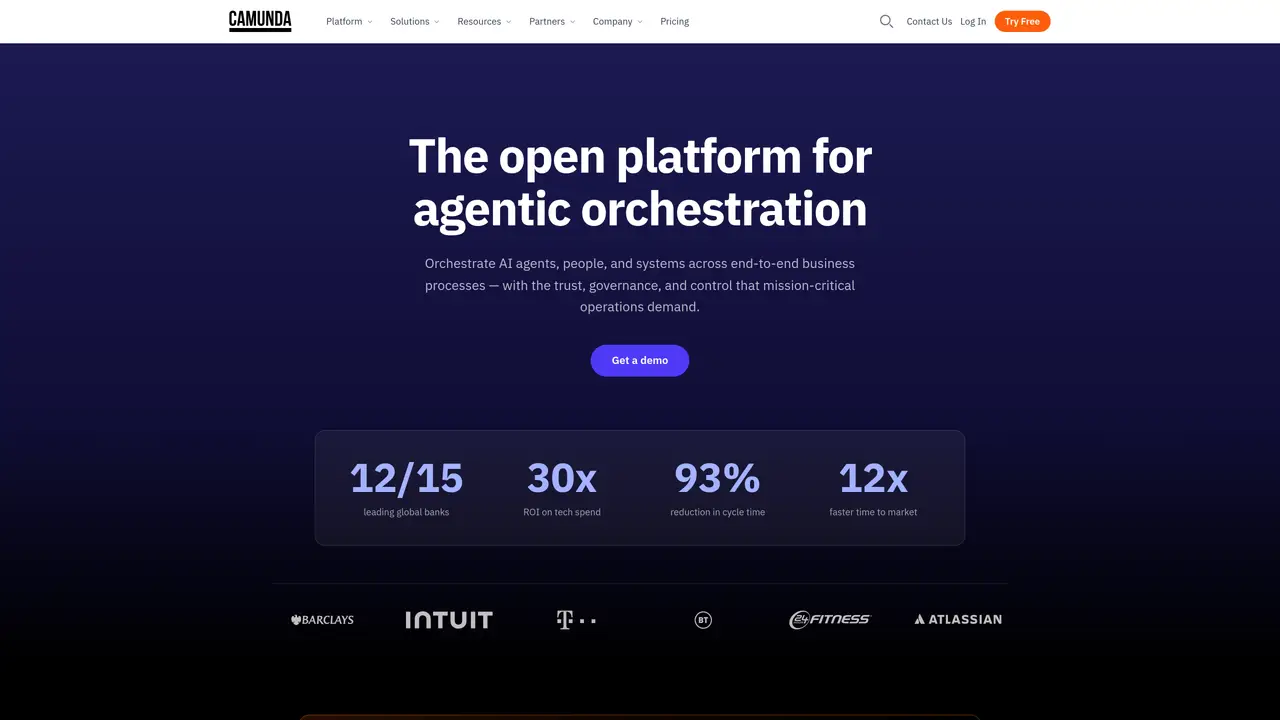
Camunda is an AI-enabled process orchestration and workflow automation platform that helps organizations design, run, and optimize complex business processes. Instead of embedding business logic directly into applications, teams can define workflows separately and orchestrate services, human tasks, and AI agents in a structured way. This approach makes systems more flexible, scalable, and easier to maintain. The platform supports visual process modeling using BPMN standards, enabling clear collaboration across teams. It integrates with microservices architectures, automates repetitive tasks, and provides real-time analytics to monitor workflows and detect bottlenecks. With cloud-native architecture and distributed execution, Camunda scales reliably to handle high-volume processes across diverse systems. Developers can define and execute workflows programmatically, connect services via APIs and connectors, and monitor execution through dashboards and analytics tools. The platform is designed for developers, enterprises, and DevOps teams building automation pipelines, AI-driven workflows, and end-to-end business process automation.
Key features
- Visual workflow modeling using BPMN standards
- Orchestration of microservices, human tasks, and AI agents
- Automation of repetitive processes with RPA and intelligent document processing
- Real-time monitoring and bottleneck detection with analytics
- Cloud-native architecture with distributed execution
- Workflow as code for programmatic control
- Scalable execution for high-volume processes
- Integration via APIs and connectors
- AI & agent orchestration within workflows
- Deployment options for Camunda Cloud or self-hosted infrastructure
Use cases
- Orchestrate microservices and distributed systems workflows
- Build AI-driven automation pipelines and agent workflows
- Automate financial processes like loan approvals and payments
Pros
- Orchestrates AI agents, human tasks, and systems within unified end-to-end processes
- Provides real-time runtime visibility and continuous performance insights
- Supports BPMN 2.0 and DMN standards for clear process modeling and decision management
- Offers both self-managed and fully hosted cloud deployment options
- Includes built-in governance, compliance, and audit trails for mission-critical operations
Cons
- Production use on self-managed deployments requires an Enterprise license
- Complexity may require training for teams unfamiliar with BPMN or orchestration concepts
Frequently asked questions about Camunda
What is agentic orchestration?
Agentic orchestration automates predictable steps while using AI agents for judgment-based exceptions within a single process, allowing autonomy to be adjusted per step as trust grows.
Who should use Camunda?
Camunda is designed for enterprises, developers, and DevOps teams building scalable automation pipelines, AI-driven workflows, and end-to-end business process automation.
What deployment options does Camunda offer?
Camunda provides self-managed deployment on your own infrastructure and a fully hosted SaaS option managed by Camunda, both starting with free development tiers.
How does Camunda handle governance and compliance?
Camunda embeds policies, approvals, and escalation paths directly into processes, capturing every execution, decision, and exception for full traceability and compliance.
Can I try Camunda before purchasing?
Yes, Camunda offers a free development tier for self-managed use and a 30-day free trial for the SaaS cloud option before moving to an Enterprise license for production.
What integrations does Camunda support?
Camunda integrates with RPA tools, SAP, ServiceNow, and provides connectors and an integration framework/SDK to connect with microservices and APIs.
Camunda Website Engagement
Last Update: 10 days ago
Total Monthly Visits
0
Bounce Rate
0%
Visit Duration (avg)
0.00s
Pages Per Visit
0
Country Rank
0
United States
Global Rank
0
Category Rank
#0
Programming & Developer Software
Monthly Traffic
Traffic Sources
Traffic Share By Country
- United States15.6%
- Germany12.2%
- Spain6%
- United Kingdom5.5%
- Brazil4.5%