Build teams of AI agents that collaborate, automate workflows, and complete complex tasks together.

OmniGenT
63KMonthly visits
30Popularity
About OmniGenT
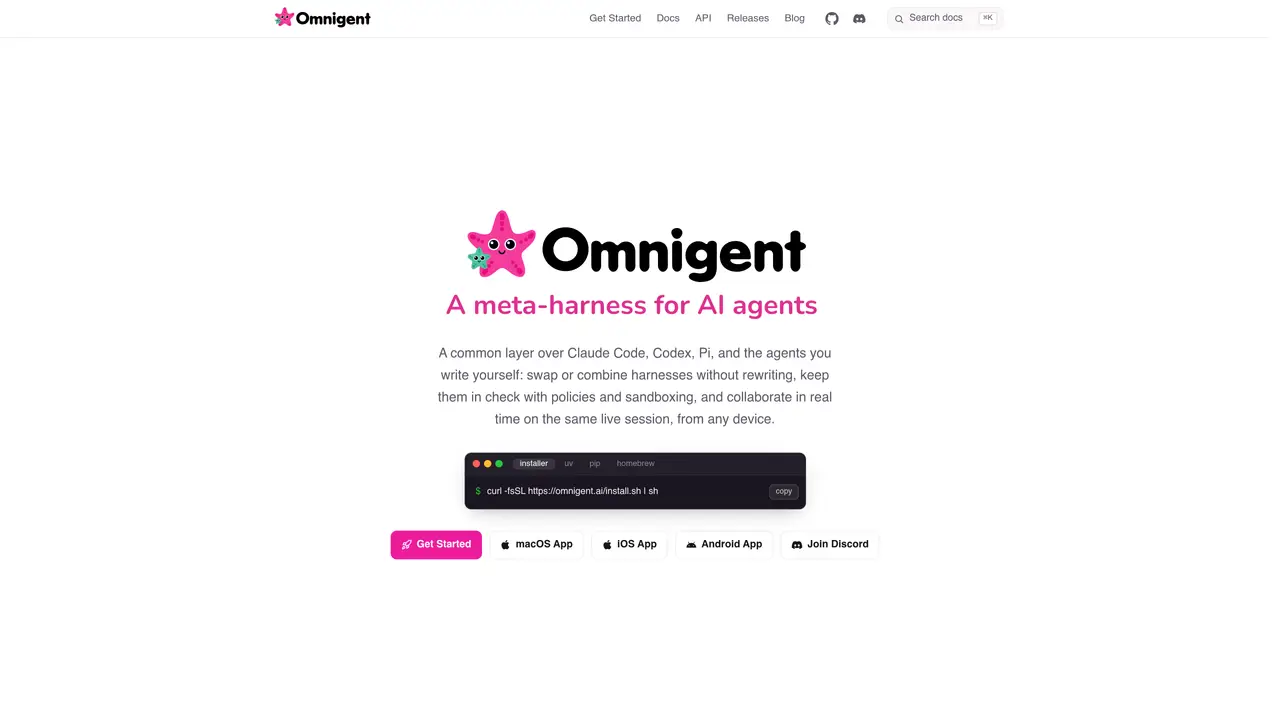
OmniGenT is an open meta-harness designed for engineers, platform teams, research groups, and technical operators who need repeatability, observability, and team review in agentic development workflows. It provides a shared runtime layer that composes AI agents, enforces policies, sandboxes actions, and steers live sessions with collaborators. Users start sessions by selecting an agent harness, model setup, or YAML-defined agent, then run it through a common runner that records activity and applies configured controls. Sessions can be shared via URL, allowing distributed teammates to inspect history, comment, and guide the same agent workflow in real time across terminal, web, and API interfaces. The tool supports composing multiple agent harnesses behind one runner, enabling teams to switch models and tools without rebuilding surrounding workflows. It also allows defining custom agents in YAML alongside built-in multi-agent options for coding orchestration and structured model debate. Stateful policies can enforce spend caps, model routing, action review, and escalation based on session behavior, while sandbox rules restrict filesystem, network access, and credential visibility to reduce risk.
Key features
- Compose multiple agent harnesses behind a single runner
- Define custom agents in YAML alongside built-in options
- Apply stateful policies for spend caps, model routing, and escalation
- Constrain execution with sandbox rules for filesystem, network, and credential access
- Share live sessions via URL with persistent history for collaborative review
- Support for terminal, web, native, mobile, and API interfaces
- Built-in multi-agent options for coding orchestration and model debate
- Available as alpha project with documentation, API references, and installer options
Use cases
- Coding orchestration with policy enforcement and team review
- Model comparison or combination without rewriting orchestration logic
- Collaborative debugging of AI agent sessions across distributed teams
Pros
- Unified runtime layer for composing and running multiple AI agents without rewriting workflows
- Real-time collaboration features allowing distributed teams to inspect, comment, and guide agent sessions
- Stateful policies for enforcing spend caps, model routing, and risk-based escalation at the meta-harness layer
- Secure sandboxing to restrict filesystem, network access, and credential visibility
- Supports both built-in multi-agent options and custom agents defined in YAML
Cons
- Currently in alpha stage, which may imply limited stability or incomplete features
- Requires technical setup and configuration for custom policies and sandboxing rules
Frequently asked questions about OmniGenT
What is OmniGenT and who is it for?
OmniGenT is a meta-harness designed for engineers, platform teams, research groups, and technical operators who need repeatability, observability, and team review in agentic development workflows.
How does OmniGenT work?
It provides a shared runtime layer that composes AI agents, enforces policies, sandboxes actions, and steers live sessions with collaborators through a common runner that records activity and applies configured controls.
Can I use OmniGenT with my own agents?
Yes, OmniGenT allows defining custom agents in YAML alongside built-in multi-agent options for coding orchestration and structured model debate.
Does OmniGenT support collaboration features?
Yes, sessions can be shared via URL, enabling distributed teammates to inspect history, comment, and guide the same agent workflow in real time across terminal, web, and API interfaces.
What kind of policies can OmniGenT enforce?
Stateful policies can enforce spend caps, model routing, action review, and escalation based on session behavior, while sandbox rules restrict filesystem, network access, and credential visibility.
How do I get started with OmniGenT?
Users can start sessions by selecting an agent harness, model setup, or YAML-defined agent, then run it through a common runner. Installation options include command-line tools and native apps for macOS, iOS, and Android.
OmniGenT Website Engagement
Last Update: 10 days ago
Total Monthly Visits
0
Bounce Rate
0%
Visit Duration (avg)
0.00s
Pages Per Visit
0
Country Rank
0
United States
Global Rank
0
Monthly Traffic
Traffic Sources
Traffic Share By Country
- United States51.9%
- India14.9%
- Germany6.3%
- United Kingdom5.5%
- Brazil4.7%