GitHub hosts HunyuanVideo, Tencent's open-source framework for large-scale video generation models, enabling AI-driven video creation.

Semantica
FreeStarting price
14KMonthly visits
19Popularity
About Semantica
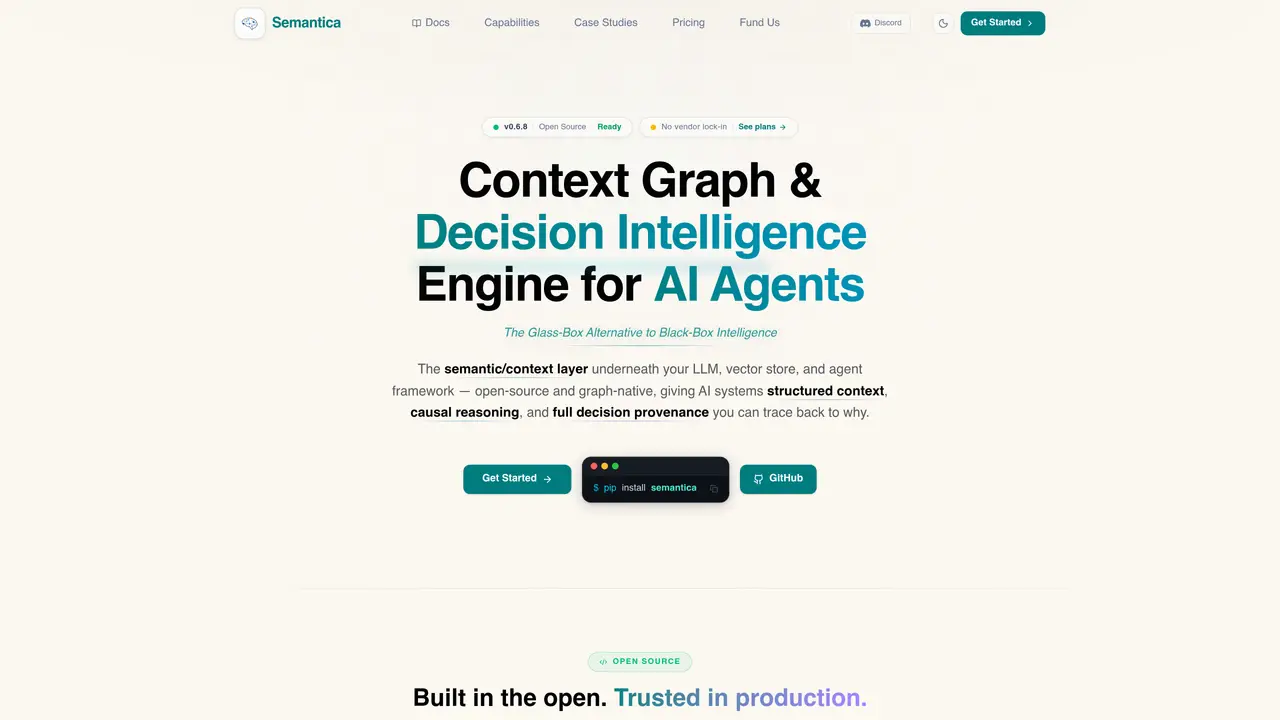
Semantica is an open-source, graph-native context and decision intelligence engine designed for AI agents and regulated environments. It unifies enterprise knowledge sources—PDFs, databases, and APIs—into a single, queryable context graph with entity resolution and provenance tracking. At inference time, agents query the graph to retrieve verified context, apply rules, and produce decisions with explicit causal links and confidence scores. Every output is grounded in the graph, traceable through sessions, and auditable via exportable W3C PROV-O lineage. The system supports both RDF and property graphs with SPARQL and Cypher under a unified API, enabling hybrid GraphRAG retrieval that blends vector search and graph traversal. Semantica is built for engineering teams deploying agentic systems, data platforms, or RAG in regulated domains such as energy, finance, healthcare, legal, and public-sector contexts. It also serves startups needing auditable, multi-agent context without vendor lock-in. The platform includes a Knowledge Explorer for visual inspection, temporal audits, and decision audit trails, with deployment options ranging from VPC to on-premises environments. Developers can initialize a ContextGraph via Python API or REST/MCP server, choose storage backends like Neo4j or FalkorDB, and integrate vector stores such as FAISS or Weaviate for hybrid retrieval. The tool emphasizes regulatory Q&A, cross-session agent collaboration, and temporal audits comparing policies and outcomes over time, ensuring transparency and compliance in high-stakes workflows.
Key features
- Unifies enterprise knowledge into a single, queryable context graph with entity resolution
- Records every AI decision with inputs, outcomes, confidence, and explicit causal links
- Supports RDF and property graphs via SPARQL and Cypher under one API
- Hybrid GraphRAG retrieval combining vector search and graph traversal
- Exports W3C PROV-O lineage and audit logs for regulatory compliance
- Temporal validity and provenance tracking for facts and decisions
- Polyglot storage with backend swapping (Neo4j, FalkorDB, RDF stores) without code changes
- Knowledge Explorer with visual inspection, timeline scrubbing, and audit trails
- Rule engines, ontologies, and temporal queries for explainable inferences
- Python API, REST API, and MCP server for pipeline and IDE agent integration
Use cases
- Regulatory Q&A with exact, exportable provenance for audits and compliance
- Agent teams sharing a live, cross-session context graph for collaborative decision-making
- GraphRAG for grounded answers in high-stakes workflows like healthcare or finance
Pros
- Open-source core under MIT license with no paywalled features
- Graph-native architecture supporting RDF and property graphs with SPARQL and Cypher
- Full provenance tracking via W3C PROV-O compliant audit trails
- Zero vendor lock-in with on-premises and VPC deployment options
- Built for regulated environments with GDPR, EU AI Act, and HIPAA compliance
Cons
- Requires technical expertise to integrate and deploy in regulated environments
- Limited community support compared to larger commercial alternatives
- Enterprise features may require pilot or design-partner engagements
Semantica videos
Frequently asked questions about Semantica
What does Semantica do?
Semantica is an open-source, graph-native context and decision intelligence engine that unifies enterprise knowledge into queryable context graphs. It enables AI agents to retrieve verified context, apply rules, and produce decisions with explicit causal links and confidence scores.
Who is Semantica designed for?
Semantica is designed for engineering teams deploying agentic systems, data platforms, or RAG in regulated domains such as energy, finance, healthcare, legal, and public-sector contexts. It also suits startups needing auditable, multi-agent context without vendor lock-in.
What are the pricing options for Semantica?
The core engine is free forever under the MIT license. Enterprise engagements are available for pilot and design-partner work, full on-prem or VPC deployment, and SLA-backed support, but the software itself does not force cloud usage.
Does Semantica integrate with existing vector stores?
Yes, Semantica supports hybrid retrieval by integrating vector stores such as FAISS or Weaviate alongside graph databases like Neo4j or FalkorDB through a unified API.
How do I get started with Semantica?
You can initialize a ContextGraph via Python API or REST/MCP server. Start by installing the package with 'pip install semantica' and explore the open-source core, documentation, and demo resources available on the website.
Can Semantica be deployed on-premises?
Yes, Semantica is designed for on-premises and VPC deployment, ensuring data never leaves your environment. It supports storage backends like Neo4j, FalkorDB, and RDF triple stores.
Semantica Website Engagement
Last Update: 9 days ago
Total Monthly Visits
0
Bounce Rate
0%
Visit Duration (avg)
0.00s
Pages Per Visit
0
Country Rank
0
United States
Global Rank
0
Monthly Traffic
Traffic Sources
Traffic Share By Country
- China46.7%
- United States33.8%
- Vietnam6.9%
- Japan5.1%
- India3.3%