
Generate content, correct spelling, suggest synonyms to enhance writing.

Locul
$49/mStarting price
2.4KMonthly visits
6Popularity
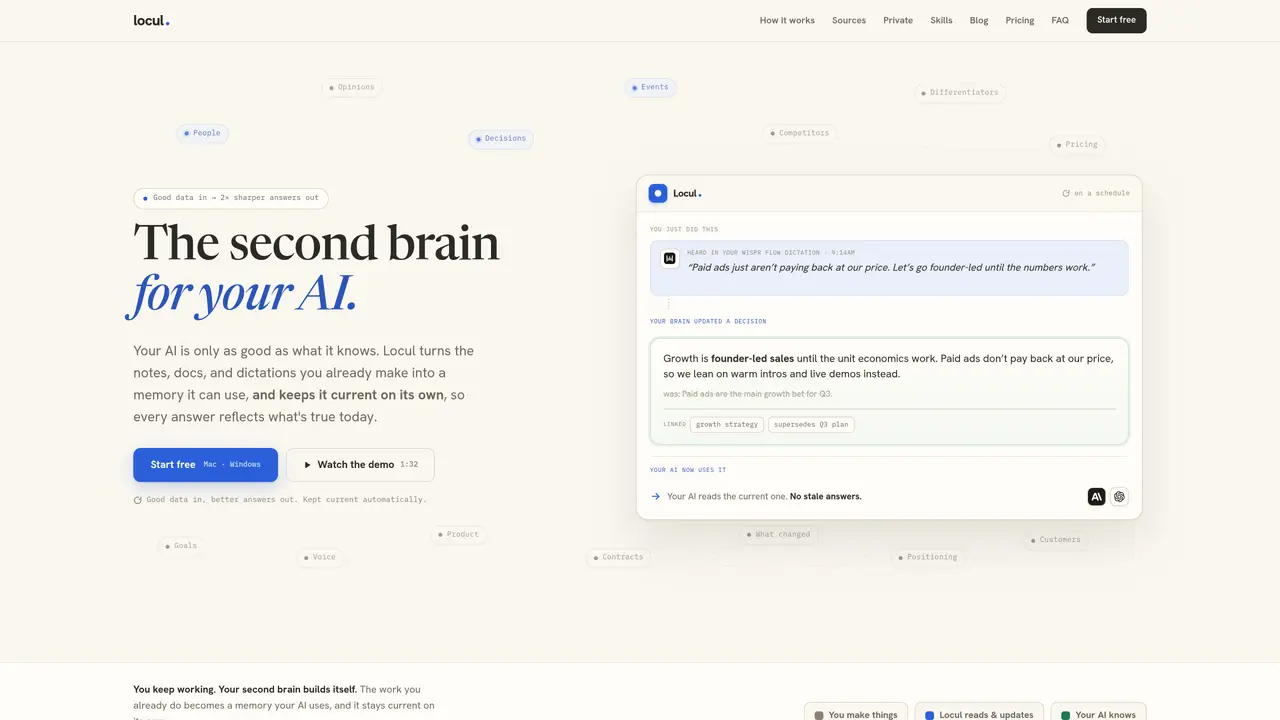
About Locul
Locul ingests files, Notion workspaces, Obsidian vaults, dictations and LinkedIn posts that users already create and transforms them into a continuously updated memory for AI assistants. The application reads content in place without altering originals, indexes changes on a schedule, and merges updates into existing memories while preserving prior versions. It connects directly to AI tools such as Claude, ChatGPT, Cursor and Codex so those tools can retrieve context without manual pasting. The system runs locally on Mac or Windows, with an optional opt-in cloud AI mode that uses the user’s own API key. No manual tagging or upkeep is required; the brain builds and refreshes itself as new material is added. Users can query their AI about current projects, pricing decisions or brand positioning without re-explaining prior context.
Key features
- Local-first operation on Mac and Windows
- Supports markdown, PDF, Notion, Obsidian, dictations and LinkedIn
- Self-updating memory with change history
- Direct integration with Claude, ChatGPT, Cursor and Codex
- Opt-in cloud AI mode using user’s own API key
- Guided setup for AI tool connections
- Preserves original files and workspaces untouched
- Automatic indexing of new content
Use cases
- Keeping AI assistants current on product details and pricing decisions
- Providing team-wide shared context for brand voice and guidelines
- Reducing repetitive context pasting during AI-assisted drafting
Pros
- Reads content in place without exporting or uploading
- Automatically detects and indexes new or changed files
- Preserves prior versions of memories for change tracking
- Runs locally with optional opt-in cloud AI mode
- Integrates with existing AI tools via guided setup
Cons
- Free tier limited to 500 memories
- LinkedIn and Notion require paid plan
- No mobile or web app versions
- Local-only operation without cloud sync
Frequently asked questions about Locul
What is Locul and what does it do?
Locul transforms existing files, Notion workspaces, Obsidian vaults, dictations, and LinkedIn posts into a continuously updated memory for AI assistants. It reads content in place without altering originals, indexes changes on a schedule, and merges updates into existing memories while preserving prior versions.
Who is Locul designed for?
Locul is designed for individuals and teams who want their AI assistants to have accurate, up-to-date context about their work, projects, and decisions without manual upkeep. It suits users who already create notes, documents, or dictations and want to leverage that content for AI interactions.
How does Locul keep the AI memory current?
Locul runs on a schedule to index new files or notes, compares them against existing memories, updates outdated information, and stores old versions for reference. It automatically pulls from sources like Notion, Obsidian, and dictations to ensure the AI always has the latest context.
Does Locul require manual tagging or upkeep?
No, Locul does not require manual tagging or upkeep. The system builds and refreshes itself as new material is added, eliminating the need for users to manage or maintain the memory manually.
Can Locul integrate with AI tools like Claude or ChatGPT?
Yes, Locul connects directly to AI tools such as Claude, ChatGPT, Cursor, and Codex, allowing them to retrieve context without manual pasting. The integration is designed to be seamless, with guided steps for setup.
Does Locul store data in the cloud or locally?
Locul runs locally on Mac or Windows, with an optional opt-in cloud AI mode that uses the user’s own API key. All data is stored locally by default, ensuring privacy and control over the information.
Locul Website Engagement
Last Update: 9 days ago
Total Monthly Visits
0
Bounce Rate
0%
Visit Duration (avg)
—
Pages Per Visit
0
Country Rank
0
United States
Global Rank
0