AI assistant for safe, reliable productivity with code, collaboration, and integrations.

LifesOS
$9.99/moStarting price
0Popularity
About LifesOS
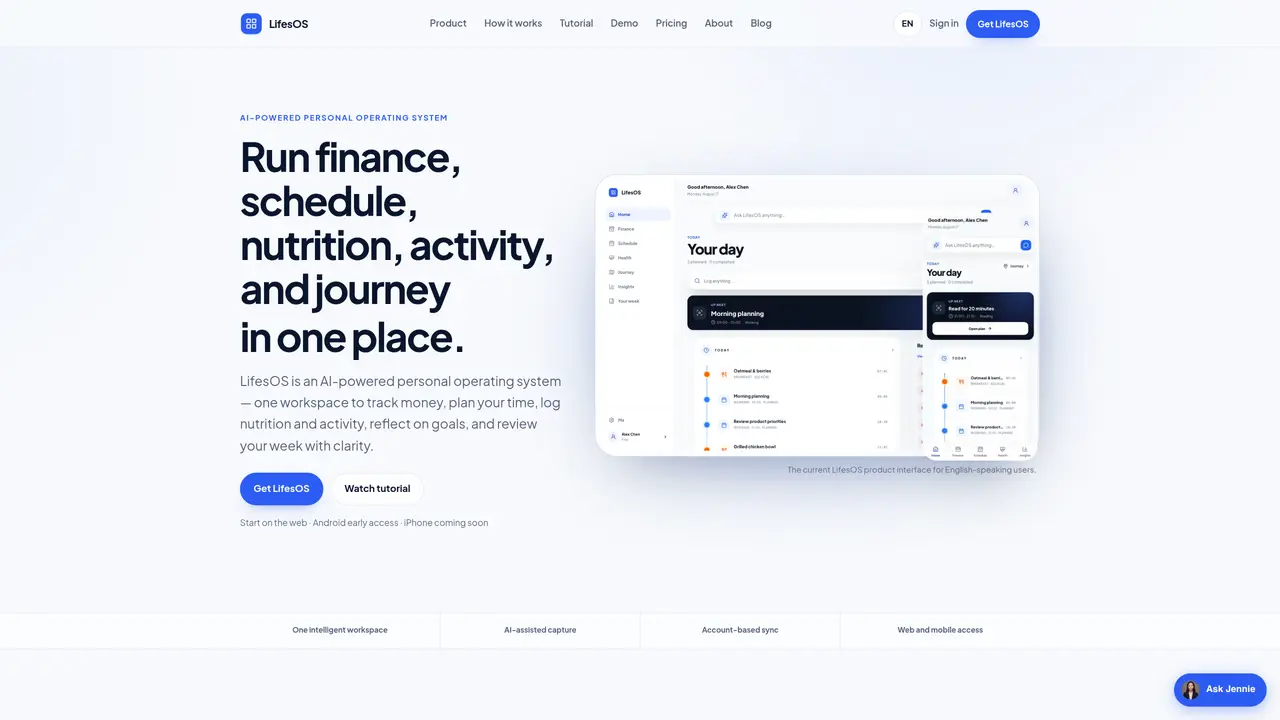
LifesOS is an AI-assisted personal operating system that consolidates finance tracking, scheduling, nutrition logging, activity monitoring, and reflective journaling into a single workspace. Users can manually enter data or use AI to interpret natural language inputs such as voice notes or text descriptions, which the system structures and confirms before saving. The platform organizes inputs into domains like finance, schedule, nutrition, activity, and journey, while Home and Insights views provide cross-domain summaries and trends. Weekly reports highlight patterns in spending, productivity, nutrition, and movement, offering comparisons and recommendations based on recorded data. The system emphasizes clarity and control, allowing users to review structured details before finalizing entries. It supports cross-device synchronization via web and early-access Android, with iPhone access planned. LifesOS prioritizes privacy with HTTPS connections, secure password hashing, email verification, and server-side data isolation.
Key features
- AI text and voice input for quick data capture
- Finance tracking with income, expenses, budgets, and spending patterns
- Schedule planning with tasks, events, and recurring routines
- Nutrition logging with calories, macros, and personal targets
- Activity tracking with exercise duration and calories burned
- Journey feature for reflections, notes, and memories
- Weekly reports with trends, comparisons, and recommendations
- AI analysis for pattern recognition and insights
Use cases
- Consolidating personal finance, schedule, and health tracking in one workspace
- Reviewing weekly patterns in spending, nutrition, and activity to adjust habits
- Using AI-assisted input to log daily activities without manual form filling
Pros
- AI-assisted input via text, voice, or image
- Cross-domain organization with finance, schedule, nutrition, activity, and journey tracking
- Weekly reports and insights summarizing patterns across areas
- Cross-device synchronization via web and early-access Android
- Privacy safeguards including HTTPS, secure hashing, and account isolation
Cons
- No native iOS app available yet
- Android access limited to early access
- AI Expert Chat subject to fair-use limits on Advanced plan
- Subscription managed only via website, not in-app
LifesOS videos
Frequently asked questions about LifesOS
What is LifesOS?
LifesOS is an AI-powered personal operating system that consolidates finance tracking, scheduling, nutrition logging, activity monitoring, and reflective journaling into a single workspace. It uses AI to interpret natural language inputs like voice notes or text descriptions, structures the details, and confirms them before saving.
Who is LifesOS designed for?
LifesOS is designed for individuals seeking to organize and understand different aspects of their daily life in one place. It suits busy professionals, personal planners, and health-conscious users who want to track finances, schedules, nutrition, and activities without switching between multiple apps.
How does LifesOS handle data input?
Users can manually enter data or use AI-assisted input by describing events or plans in natural language. The system interprets the intent, structures the details, and asks for confirmation before saving the information into the appropriate domain like finance, schedule, nutrition, or activity.
What devices and platforms does LifesOS support?
LifesOS is available on the web and offers early access for Android devices. iPhone support is planned for the future. Data syncs across devices when users sign in with the same account.
How does LifesOS ensure privacy and security?
LifesOS uses HTTPS for secure connections, stores passwords as secure hashes, requires email verification, and implements server-side data isolation. AI features are only activated when explicitly chosen by the user.
What kind of insights does LifesOS provide?
LifesOS provides weekly reports that combine recorded data into highlights, comparisons, trends, and recommendations. These insights help users review patterns in spending, productivity, nutrition, and movement across different areas of their life.